


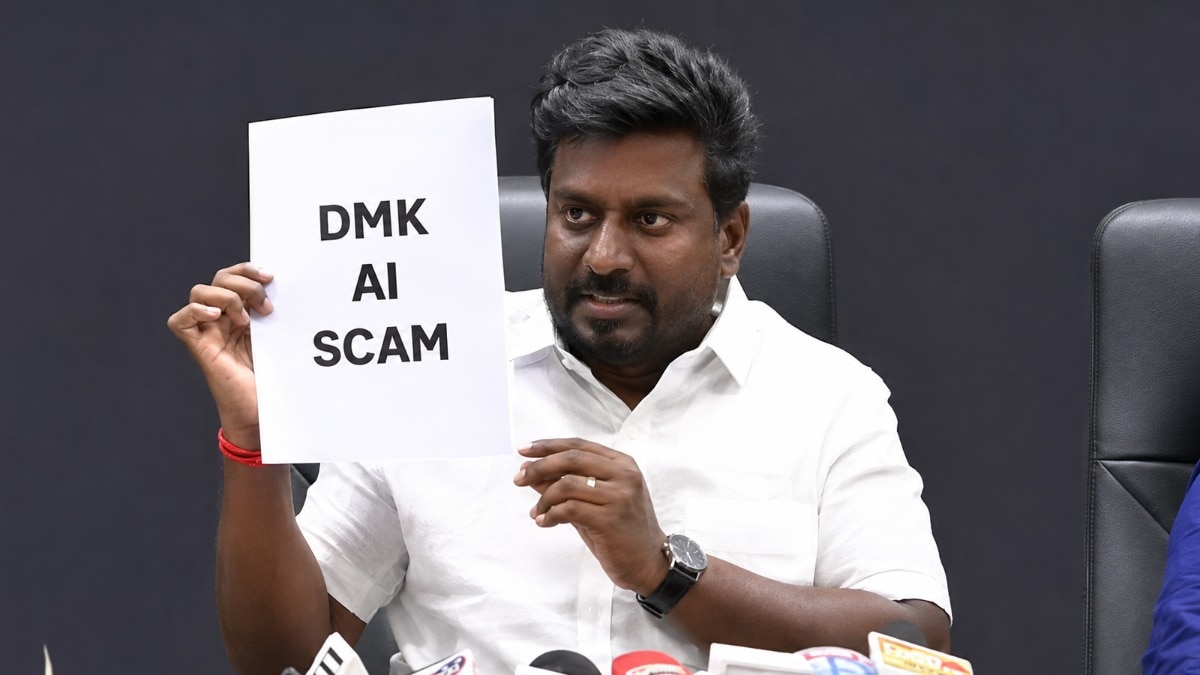
Chennai: Tamil Nadu School Education Minister A Rajmohan on Saturday accused the previous DMK government of using Artificial Intelligence to generate poor-quality books and carry out large-scale corruption in the procurement of materials for the Periyar Arivulagam library in Coimbatore. Calling the situation India's first AI scam, he claimed the irregularities extended beyond Coimbatore, with similar purchases planned for several public libraries across the state involving significant public funds.
Rajmohan stated that thousands of volumes containing fabricated information and objectionable material were sourced from a single publisher under the prior administration. He alleged that artificial intelligence was utilized to produce content attributed to fictitious authors, with purchase orders issued and treasury payments rushed through before the elections.
Displaying a copy of the purchase order at a press conference in Chennai, Rajmohan noted that dozens of boxes of books had reached the Periyar library and were placed on shelves before being sealed ahead of the facility's inauguration by Chief Minister Joseph Vijay. He pointed to factual and conceptual errors in the texts, such as misrepresenting the classical Tamil work Naaladiyar as an individual human philosopher rather than a collection of verses by Jain monks.
The minister claimed the procurement controversy spanned multiple proposed library projects across various cities, involving substantial financial outlays for both physical and online books. He added that the state government has lodged a formal complaint with the Directorate of Vigilance and Anti-Corruption and plans to establish a special committee to examine similar procurements across other major public libraries.
The controversy originally surfaced after acclaimed Tamil writer Perumal Murugan, who served on a 137-member book recommendation committee appointed by the previous administration, flagged unusual procurement practices and high pricing in an article published in November. Murugan highlighted unfamiliar publishers, unverified ISBN numbers, exorbitant book prices, and severe factual errors within the texts.
The DMK strongly rejected the accusations, with party representative I Paranthamen characterizing the claims as a manufactured narrative designed by the current leadership to deflect attention from its own administrative shortcomings. Paranthamen questioned why the administration had not simply removed the disputed books from shelves if they were truly objectionable, challenged the government to release all purchase records and transaction dates, and noted timeline discrepancies regarding library stamps applied after the DMK's tenure had concluded.