


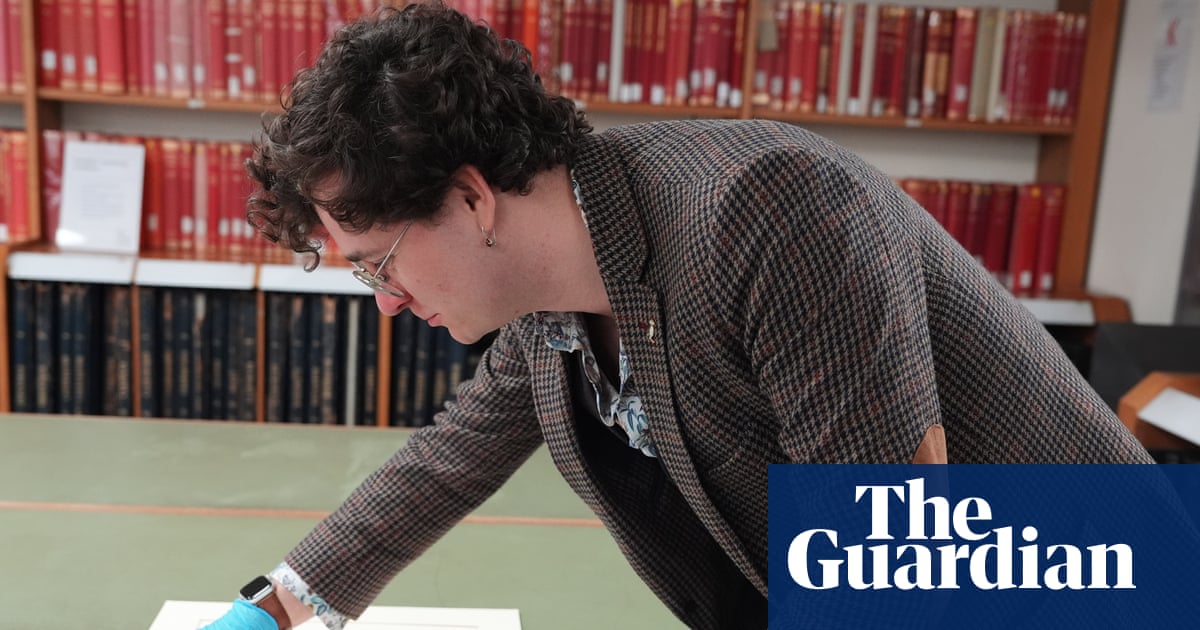
London: As communities across the United Kingdom prepare for Bonfire Night celebrations, the original legal foundation for the annual event rests quietly inside the National Archives in southwest London. The 1605 Thanksgiving Act, penned in elaborate calligraphy on a flat vellum sheet, was enacted by King James I following the failure of Guy Fawkes and his co-conspirators to blow up the monarch, the Lords, and the Commons during the opening of parliament. Designed to commemorate the deliverance of the Protestant church from the Gunpowder Plot, the legislation mandated annual church services every fifth of November.
This historical statute forms part of a massive collection of documents related to Britain's most famous treason plot, included in a monumental transfer of four million records from the parliamentary archives at the Palace of Westminster to the National Archives in Kew. The logistics-heavy relocation project has officially concluded after spanning five years, integrating 16.5 linear kilometres of parliamentary history alongside the 174.5 linear kilometres of documents already maintained at the repository.
Experts at the archive note that early modern parliamentary acts often began with flowery introductions before moving into the actual legislation. Dr Graham Moore, an early modern parliament specialist, highlighted passages containing florid language about King James I and his royal lineage. Other items tied to the conspiracy include an exceptionally well-preserved House Commons journal featuring a handwritten marginal note by a clerk on November 5, 1605, documenting the discovery of 36 barrels of gunpowder and Guy Fawkes in the cellars of the Palace of Westminster. A separate scroll details the Act of Attainder, which condemned the plotters to be hanged, drawn, and quartered.
The massive relocation effort involved moving materials from their historic storage in the Victoria Tower to a facility better equipped for long-term preservation and public accessibility. Archivists have catalogued every item with individual barcodes, making them available for free public viewing. Alongside major constitutional milestones, the collection features unusual artifacts including a sword, a uniform fragment, and a piece of a gravestone, as well as a suffragette banner secretly brought into the Ladies' Gallery of the Commons in October 1908 before protesters chained themselves to the iron grille.
Among the physical records is the archive's longest act, the 1821 Land Tax Commissioners Act, which spans 348 metres across 757 vellum membranes and names 65,000 commissioners. Another critical holding is the Great Reform Act of 1832, described by nineteenth-century records specialist Dr Joe Cozens as an essential constitutional stepping stone toward modern democracy for extending the franchise to middle-class men in borough towns.
With this final integration, the National Archives oversees a total of 20 million records, including deep-storage holdings in Cheshire. Chief Executive Saul Nassé observed that while the records spent decades at Westminster, the historic palace was never designed to meet modern preservation standards. Bringing parliamentary, judicial, and governmental records under one institutional umbrella unites the three arms of the British state in a single location, offering unprecedented public access to the nation's documentary heritage.