


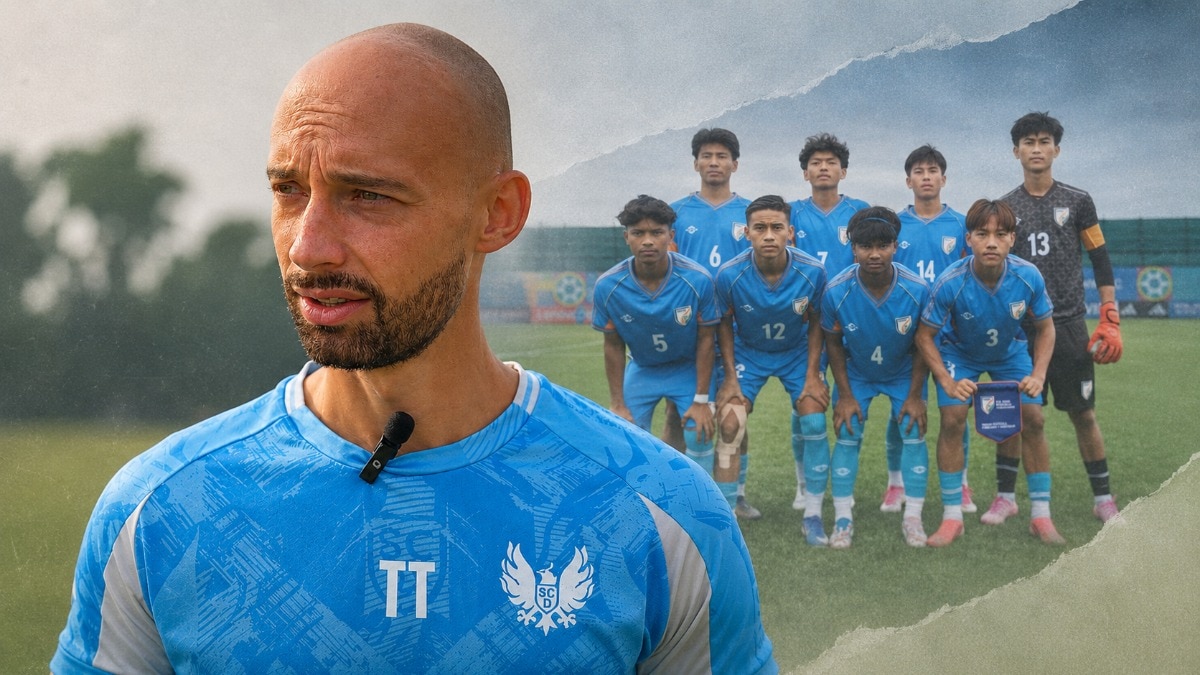
There is a fundamental question lurking beneath Indian football's long-running debate regarding foreign player limits. If clubs require mandates to dictate how many domestic players they must field, what does that reveal about the underlying system responsible for developing those athletes in the first place? One organization taking a direct stance on youth integration is SC Delhi, whose squad features a heavy Under-21 presence. Youngsters like Kharon Subba, Mohammed Azhar, and Aimen are receiving genuine playing opportunities rather than merely occupying roster spots. Guiding this philosophy is head coach Tomasz Tchorz, who maintains that India possesses no shortage of raw potential. Instead, the primary obstacle is an inadequate system that fails to properly nurture it.
Tchorz offers a direct analogy, comparing squad restrictions on overseas players to a temporary medicine given to an ailing patient. While it might offer immediate relief, it ultimately fails to address the root illness. He clarifies that he is not advocating for the exclusion of foreign footballers, noting he would gladly support a lineup consisting entirely of overseas players if they represented the absolute best available talent. Conversely, he believes the exact same principle should apply to domestic players without administrative quotas interfering with team selection.
This debate follows a difficult stretch for the senior national team, highlighted by friendly matches against Brazil and Uruguay where India suffered heavy defeats. While those matches exposed a stark difference in speed, technique, and decision-making under pressure, such gaps cannot be resolved solely within a national camp. They originate much earlier through coaching quality, competitive match volume, and early opportunities. Tchorz notes that observers frequently observe young Indian players holding their own against international peers, only for that promise to stall when the transition to senior football arrives because senior setups rarely gamble on unproven youth.
That bottleneck is exacerbated by a severe shortage of competitive fixtures at the youth level. According to data highlighted by AIFF executive committee member Lalnghinglova Hmar, Indian Under-15 players typically contest only 12 to 15 competitive matches per year, compared to more than 40 for their counterparts in countries like Japan and South Korea. Additional systemic hurdles include a scarcity of qualified coaches and organized youth leagues across multiple states, depriving teenagers of essential game-time experience necessary to handle match pressure.
While India's participation at the inaugural FIFA U-15 World Cup and Festival in Azerbaijan showcased glimpses of promise—featuring wins over nations like Laos, Cameroon, and Cuba alongside tougher losses—it underscored the massive gap in sustained international competitiveness. Tchorz attributes part of this cultural hurdle to how clubs measure immediate success, prioritizing short-term visibility, media recognition, and winning over the long-term investment required to develop players for the future.