


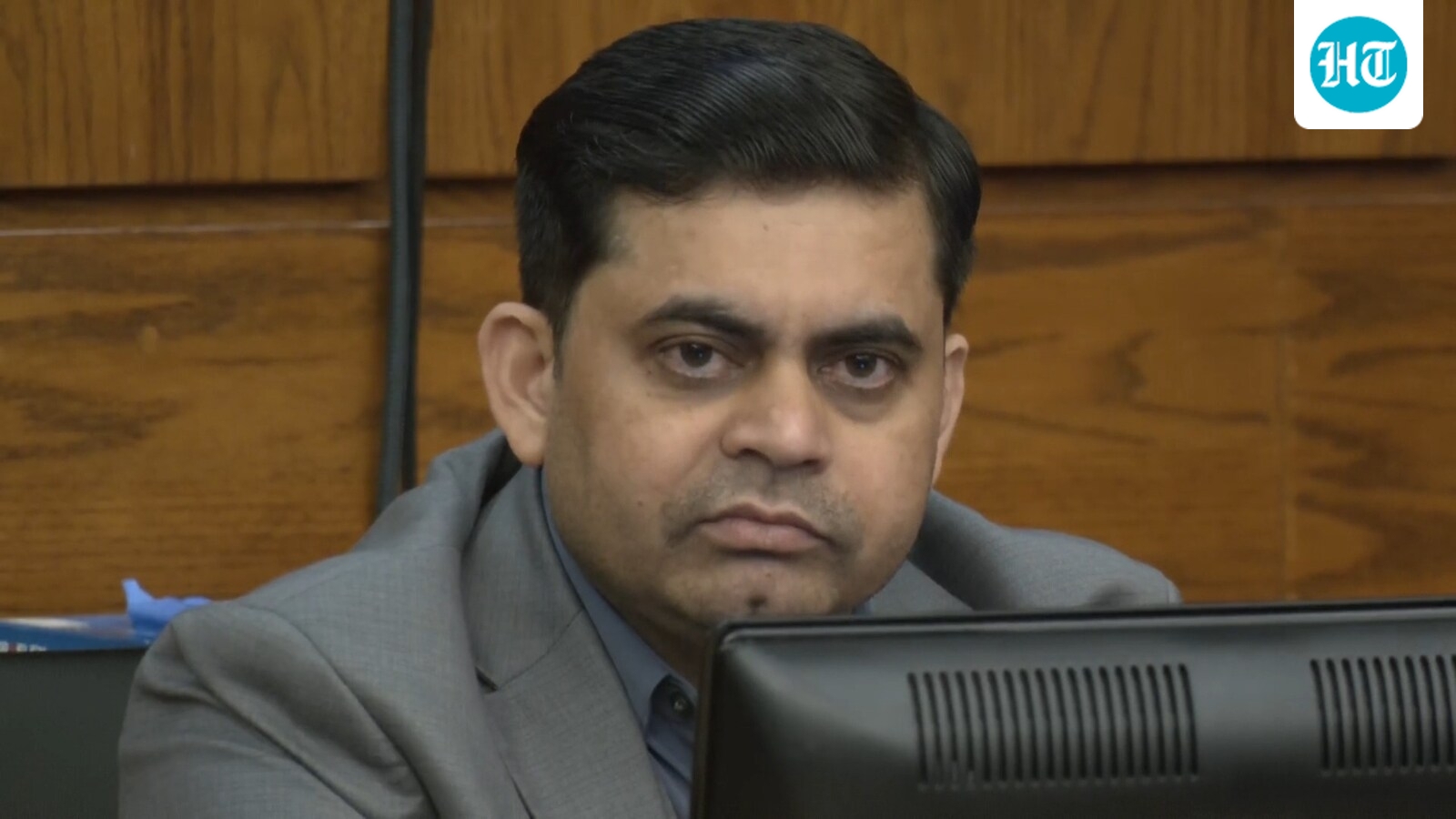
A legal expert has suggested that Naresh Bhatt will likely be found guilty of first-degree murder or face an acquittal following his dramatic testimony in a Virginia courtroom on Thursday. Bhatt is on trial for the killing of his wife, Mamta Kafle Bhatt, a young nurse and mother who vanished from her Manassas Park home more than two years ago. Authorities arrested Bhatt three weeks after her disappearance, subsequently charging him with first-degree murder, concealment of a dead body, and defiling a dead body.
During his testimony, Bhatt maintained his claim that his wife died by suicide, telling jurors that he discovered her unconscious on the night she went missing, surrounded by vomit, blood, and an open packet of insecticide. However, in a stunning admission, Bhatt confessed that he used a saw to dismember her remains and attempted to conceal them. Following a meeting between attorneys and the judge, it was determined that the court would provide a waterfall instruction descending to second-degree murder, though not manslaughter.
Frank Salvato, a Virginia criminal defense attorney, spoke with CBS News affiliate WUSA9 regarding the potential outcomes of the trial. According to Salvato, the new jury instructions mean the panel could consider a second-degree murder conviction if they determine the act lacked the willfulness and premeditation required for a first-degree charge. Despite this, Salvato characterized the proceedings as an all-or-nothing scenario for the defense, stating he views it primarily as an acquittal or a premeditated murder verdict rather than a second-degree case.
Explaining the waterfall instruction, Salvato noted that the process begins with the highest charge and steps downward. Under Virginia law, the judge indicated that a second-degree charge remains possible even in the absence of malice. Because Bhatt already conceded to the concealment and defilement charges, he is expected to be found guilty of those offenses. Salvato observed that the defense's strategy appears to be a gamble aimed at creating reasonable doubt regarding the killing itself, hoping the jury might focus solely on the lesser charges the defendant openly admitted to while rolling the dice on the primary murder counts.