


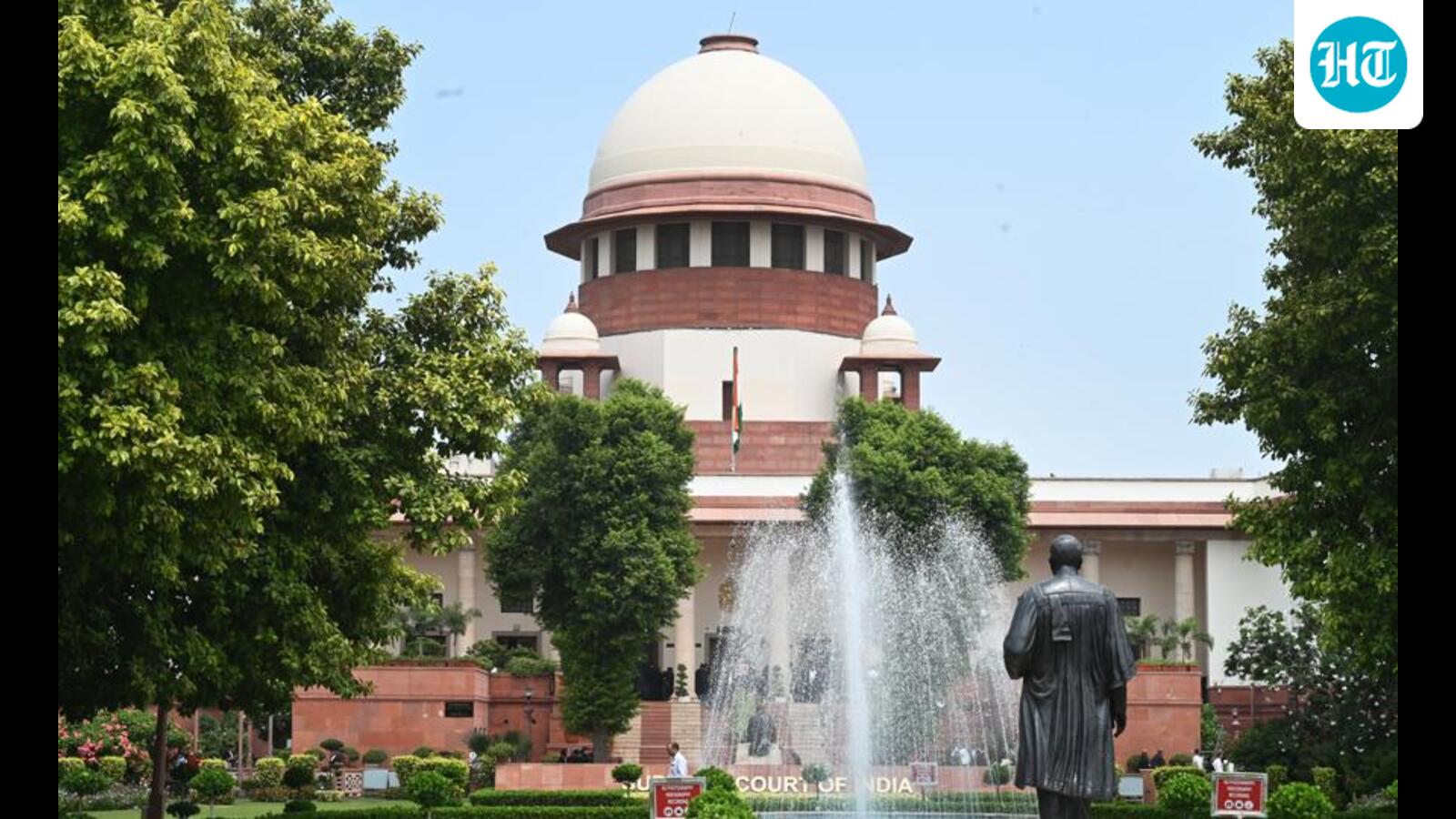
The Supreme Court on Thursday stayed criminal contempt proceedings initiated by the Punjab and Haryana High Court against Punjab chief secretary KAP Sinha over the state government’s failure to comply with its directions on payment of pending dearness allowance (DA) arrears to employees and pensioners, questioning the need to send the top bureaucrat to jail over the dispute.The Supreme Court questioned the need to send the top bureaucrat to jail. (HT PHOTO)A bench of Justices BV Nagarathna and R Mahadevan passed the order after senior advocate Vikas Singh, appearing for the additional chief secretary and the state government, informed the court that Sinha was being hauled up for criminal contempt by the high court in a matter that had already been disposed of.“Why are you interested in sending the chief secretary to jail? We will stay the contempt.
Other proceedings can go on,” the bench told the contempt petitioner, directing a stay on further proceedings in the criminal contempt case until further orders.The bench also took exception to the petitioner’s reliance on an internal communication allegedly issued by Sinha to state departments, asking them not to comply with court orders.Advocate Ravi Sharma, appearing for petitioner Manjit Singh Randhawa, told the court that the chief secretary had sent a communication to all departments stating that court orders did not have to be complied with.“You cannot press for contempt based on their internal communication. We do not appreciate such arm-twisting.
You cannot initiate criminal contempt because of these departmental communications,” said the bench.It questioned whether a decision by the chief secretary to advise against compliance because the state government intended to approach the Supreme Court could, by itself, amount to criminal contempt. “If the chief secretary asks for not complying because they are going to the Supreme Court, will it be criminal contempt?” asked the bench.In its order, the court said it had examined the high court’s October 12 order and a subsequent order dated October 13, directing Sinha to remain personally present before it on Thursday. It also took note of the background of the disputes between the parties that had led to the contempt petition.The proceedings arise from the Punjab government’s failure to implement the high court’s August 3 directions to release pending DA and dearness relief (DR) instalments to employees and pensioners at rates applicable to All India Services officers serving in the state, in line with the Central government pattern.The high court had directed the government and Punjab State Power Corporation Limited to clear the dues within a fortnight, with six per cent annual interest on delayed payments.
After the state failed to meet the deadline, employees and pensioners approached the high court alleging non-compliance.On October 12, the high court issued a notice to Sinha to show cause why criminal contempt proceedings should not be initiated against him. It subsequently directed him to appear personally before it on November 5.The high court also questioned the government’s continued failure to implement its directions despite having approached the Supreme Court, making it clear that merely filing an appeal did not absolve the state of its obligation to comply unless the order was stayed or modified by the apex court.The high court imposed costs of ₹1 lakh on the state government for failing to file a reply in the contempt petition and summoned the chief secretary to explain the steps taken towards compliance.In a status report filed before the high court, Sinha pegged the state’s outstanding DA/DR liability for the period between July 1, 2021, and September 30, 2026, at ₹22,818 crore, while the total outstanding liability towards employees and pensioners stood at ₹32,418 crore.The state government has cited the substantial financial burden involved in clearing the arrears, with its counsel telling the Supreme Court on Wednesday that the present dispensation had inherited legacy arrears of around ₹13,000 crore from the previous government.