


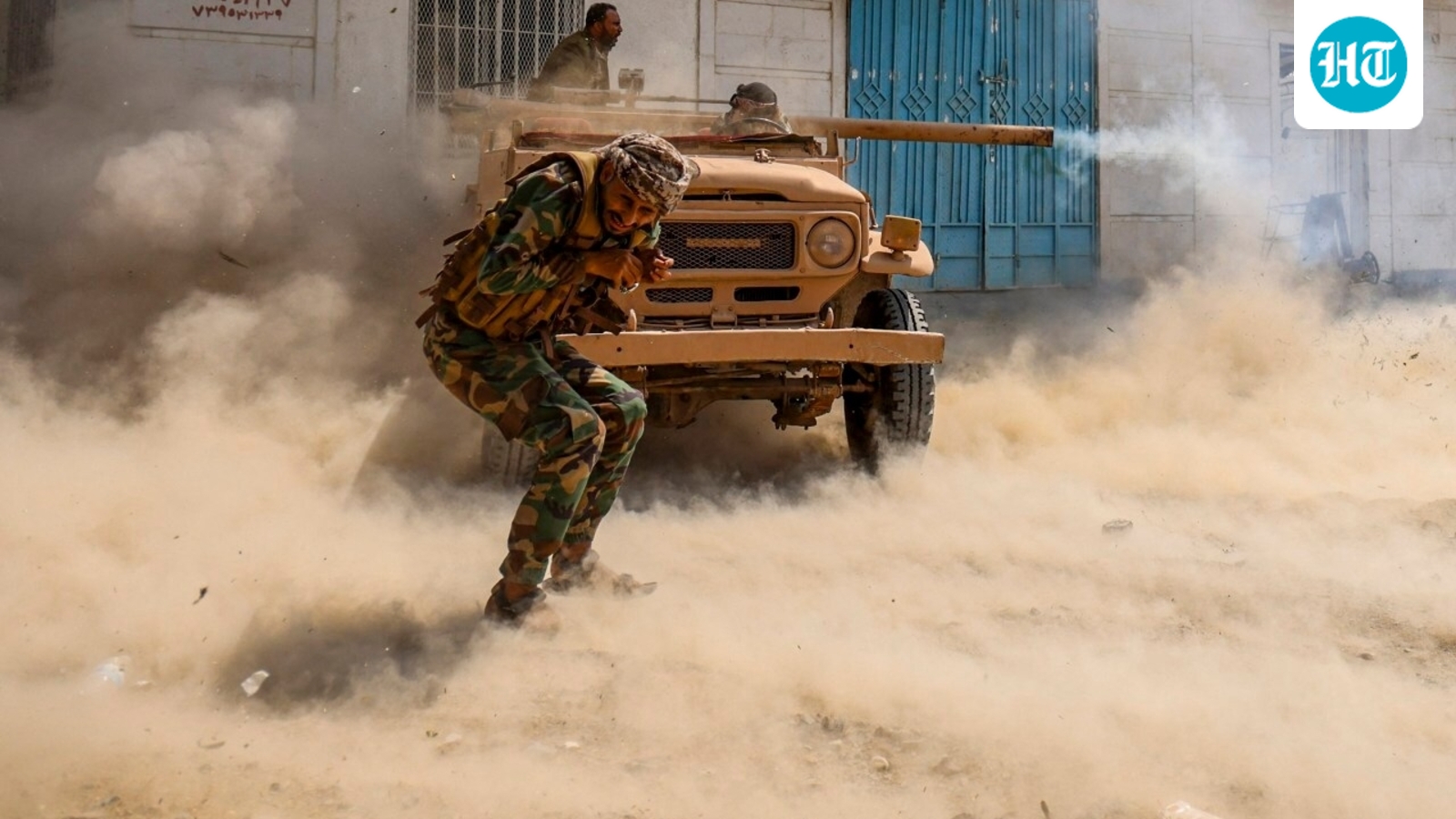
DUBAI—After Yemen’s Iran-backed Houthi rebels attacked Saudi Arabian oil tankers in the Red Sea and seized territory commanding the strategic Bab al-Mandeb chokepoint, the kingdom reached out to the group to see what it would take to arrive at a negotiated halt to the hostilities. The answer it got back: $51 billion.Yemeni government fighters, allied with Saudi Arabia, in combat against Houthi forces last month.The Houthis said that was the sum needed to cover the cost of years of Saudi strikes and a long blockade, people briefed on the discussions said.
Other figures have come up since, the people said, but the message was clear: The price of an exit would be in the tens of billions of dollars. For good measure, the Houthis would want the kingdom to officially recognize the militants as the rulers of Yemen, effectively accepting an Iranian-armed adversary on its southern border.The demands hammered home how Saudi Arabia faces only bad options as it tries to find a way out of the conflict it started more than a decade ago when it intervened against the Houthis in Yemen’s civil war.The fighting flared up again this summer with Houthi attacks on Saudi oil facilities and airports, as well as the militants’ offensive, which has taken more strategic territory across Yemen.The Houthis are now pressing toward Aden, the port city that is the seat of Yemen’s internationally recognized government, Saudi Arabia’s ally.
They recently moved to within some 50 miles, closer than at any time since 2015, when they seized parts of the city.No matter what path Riyadh takes, whether trying to persuade cautious allies to help more or trying to reach terms acceptable to the Houthis, there will be a heavy cost. Meanwhile, Saudi Arabia still could find itself drawn into a fresh conflict across the Middle East if Israel or the U.S. launches any new attacks on Iran, which the U.S. has warned Gulf states could come after Tuesday’s midterm elections.“The imbalance of risk between the Houthis and Saudi Arabia is even greater now than it was in the earlier period of conflict between 2015 and 2022, as the impact of the strikes on civilian and energy infrastructure undermines investor confidence,” said Kristian Coates Ulrichsen, an expert at Rice University’s Baker Institute who has long studied the region.The Houthis “present the Saudi leadership with few viable military options against an adversary that is well-entrenched, dug in, and has far less to lose from a grinding war of attrition,” Ulrichsen said.The Saudi government and Houthi leadership didn’t respond to requests for comment.In October, the Houthis carried out a near-daily campaign of attacks targeting Saudi Arabia, with a major uptick toward the month’s end.
Sites have included civilian airports, crippling travel to the kingdom, as well as repeated attacks targeting oil giant Saudi Aramco, with fires or damage reported at its facilities, said Ameneh Mehvar, a senior Mideast analyst for the conflict monitor Acled.Repeated Houthi strikes in Yemen itself have targeted areas that would serve as muster points or command centers for any Saudi-led coalition attack on the ground, The Wall Street Journal has reported. They included a strike in Yemen’s Shabwah governorate that killed at least 75 people and wounded more than 200 others, the deadliest since the civil war reignited.“The Houthis have been using shorter-range ballistic missiles to attack places like Aden,” said David Des Roches, a retired U.S.
Army colonel who has taught officers in Gulf Arab militaries, including Saudi Arabia’s. “What that does by announcing they can strike Aden is it makes it harder for the coalition to move ground forces and other elements in.”Within Saudi Arabia, officials say Crown Prince Mohammed bin Salman realizes the challenge the kingdom faces. The prince, Saudi Arabia’s day-to-day ruler under his father, the 90-year-old King Salman, doesn’t want to negotiate fully with the Houthis without gains on the ground in Yemen to use as leverage in any talks, the officials said.The Saudi military has launched repeated airstrikes on the Houthis, who in turn have alleged there have been unspecified attacks targeting their officials in San’a, the rebel-held capital.
But the prince worries sending more Saudi troops to Yemen could be bloody and spark anger at home, the Saudi officials said. Already, there have been dozens of casualties, though authorities haven’t reported them publicly.The Houthis’ demand for cash raises the threat of the kingdom repeatedly being blackmailed in the future, said Maged Al-Madhaji, a Yemeni analyst and a co-founder of a think tank called the Sana’a Center for Strategic Studies.“The Houthis are demanding a great deal, and in my assessment, the financial element may be the least significant concern for the Saudis,” Al-Madhaji said. “The bigger problem is establishing a precedent whereby the group can escalate militarily whenever it wants additional concessions or money.”To escalate on the ground, analysts believe Saudi Arabia needs help from its allies in Yemen, but the options so far remain slim.
The main outside ally the kingdom once had in Yemen, the United Arab Emirates, withdrew entirely from the anti-Houthi campaign last December after a dust-up with Riyadh. The U.A.E. backs forces wanting to establish a separate South Yemen state, undermining Saudi Arabia’s goal of maintaining a united Yemen.
Tensions between the two boiled over after Riyadh bombed what it described as a weapons shipment to the U.A.E.’s allies.Saudi Arabia has instead sought aid through its new Mecca Pact with Turkey and Pakistan, which describes an attack on one as an attack on all. Turkey’s Parliament has yet to approve it.
Pakistan, which has long sent troops to aid Saudi Arabia, has refused to join strikes inside Yemen.Egypt’s Parliament in October approved sending military support to Saudi Arabia, though Egyptian President Abdel Fattah Al Sisi has said any mission would be defensive only. The U.S., meanwhile, has so far declined to offer any direct support against the Houthis after fighting against the group in a weekslong campaign in 2025.It is unclear what, if anything, could prompt these nations to agree to an offensive mission against the Houthis, particularly as the militants continue to threaten shipping in the Red Sea.
Security analysts worry a renewed U.S. campaign against Iran could see Tehran push the Houthis, whom it has armed for years, to step up their attacks across the region.Meanwhile, Houthi strikes continue to target Saudi Arabia. There have been 26 reported incidents in the kingdom in recent days alone, according to Acled.The kingdom is three times the size of Texas and has to use its supply of U.S.-made Patriots and other interceptors to ward off threats from Iran to the east, Iraqi Shiite militias to the north and the Houthis to the south, said Des Roches, who has trained Saudi air-defense officers.Saudi Arabia has responded with airstrikes, but there is a limit to their effectiveness.“What’s really needed is some sort of ground pressure and the Saudis don’t have the ability to provide those forces,” Des Roches said.Write to Jon Gambrell at jon.gambrell@wsj.com and Summer Said at summer.said@wsj.com