


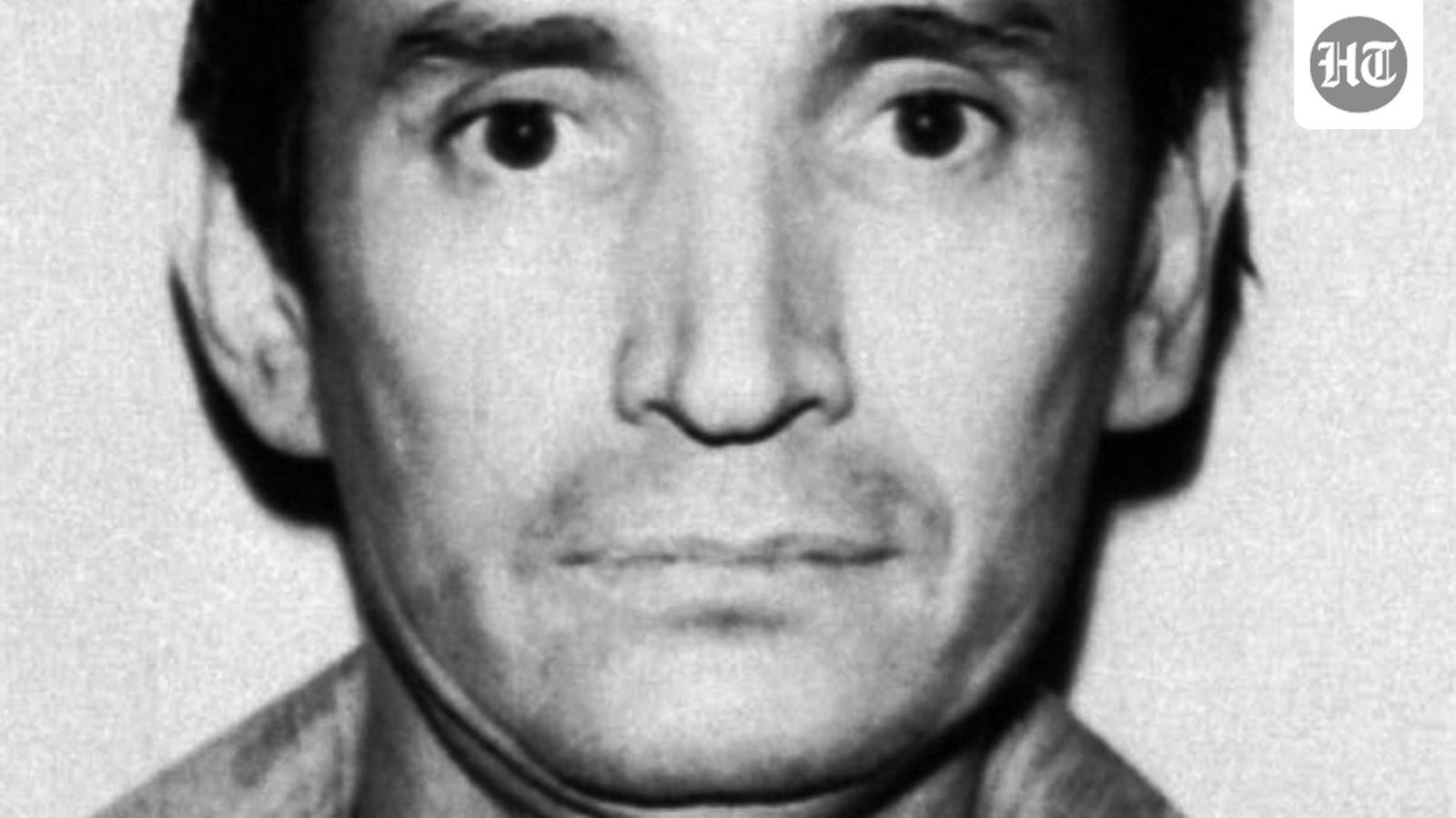
He was 80 years old.Miguel Ángel Félix Gallardo in a 1989 arrest photo.Félix Gallardo died of respiratory failure due to pneumonia at a private hospital in Guadalajara, where he had been transferred from a high-security prison on Friday, a Mexican official said.Known as El Padrino—the Godfather—Félix Gallardo built a drug-trafficking empire that reshaped Mexico’s relationship with organized crime and government corruption, leaving a legacy of violence that endures across the country. Félix Gallardo’s notoriety grew after his portrayal by Mexican actor Diego Luna in the Netflix series “Narcos: Mexico.”Diego Luna as Gallardo in the Netflix series 'Narcos: Mexico.'Félix Gallardo was born Jan.
8, 1946, in Sinaloa state and joined the police despite having only a second-grade education. By the late 1970s, as the U.S. intensified its war on drugs and Mexico’s military raided mountain strongholds in Sinaloa, he moved to Guadalajara, Jalisco.
There, he cultivated a network of political allies and built the foundations of a nationwide trafficking organization.Sophisticated, smooth and well connected, Félix Gallardo assembled an unprecedented web of protection that extended from local officials to federal law enforcement and attorneys general, security analysts said. Those ties would prove crucial in transforming the mechanics of the drug trade.At the time, Colombia’s Pablo Escobar shipped cocaine north through the Caribbean, but U.S. interdiction efforts began seizing his submarines, speedboats and freighters.
Looking for new routes, Escobar turned to Mexico, where Félix Gallardo saw an opening.Through his government contacts, Félix Gallardo arranged protection for overland routes carrying cocaine from South America through Mexico to the U.S. border. For a fee, traffickers could move their product under the protection of the Mexican state.
Rather than cash, Félix Gallardo demanded a percentage of each shipment—an innovation that made him one of the richest men in the hemisphere and altered the global narcotics business.As his profits soared, so did his political influence. He used his wealth to buy protection, expand routes and unify Mexico’s disparate trafficking groups, including those led by Rafael Caro Quintero, Ernesto Fonseca Carrillo and the Arellano Félix brothers in Tijuana.
Each paid tribute in exchange for a franchise to operate in their territory—and the protection that came with it.The rise of ‘El Chapo’Among those who got their start under Félix Gallardo was Joaquín “El Chapo” Guzmán, who began as a low-level enforcer before seeking permission to run his own national operation. According to a former Mexican police commander who became a U.S. law enforcement informant, Guzmán met with Félix Gallardo in the late 1980s to secure federal police protection.
The price: $10 million a month.Mexican Army troops search the trunk of a car for drugs at a roadblock in the Mexican state of Sinaloa in 1976.A Mexican drug agent works his way into a tunnel discovered near the Otay Mesa Border Crossing in Tijuana in 1993.“He was the super-boss, the capo de capos,” said retired Mexican Deputy Defense Secretary Gen. Tomás Ángeles.Former DEA agent Héctor Berrellez, who investigated the cartel, said Félix Gallardo’s drug trafficking operation was huge. “We knew he was running $300 million a month through a bank in San Diego,” Berrellez said in an interview.Former DEA agent Dale Stinson described Félix Gallardo as a businessman more than a thug—polished, calculating and well dressed. “He wasn’t rough around the edges,” Stinson said in an interview before he died in 2025. “He was acceptable to Mexico City politicians.” The drug lord drove a Rolls-Royce to meetings on Mexico City’s Reforma Avenue, wore tailored three-piece suits and Italian shoes—luxuries rare in Mexico at the time.“He’d give up his rivals in a heartbeat,” Stinson said. “He knew what I did, and I knew what he did.”The cartel’s collapseThat equilibrium ended in 1985, when members of Félix Gallardo’s organization kidnapped and murdered DEA agent Enrique “Kiki” Camarena, who had been investigating the cartel’s operations.
The killing enraged the U.S. government and led to one of the largest manhunts in DEA history.As Washington exerted pressure, Mexican authorities eventually arrested Rafael Caro Quintero and Félix Gallardo. Félix Gallardo’s arrest was carried out by Guillermo González Calderoni, a former ally who U.S. authorities said was on the cartel’s payroll and who was then a top Mexican law-enforcement official.
It marked the collapse of the original Guadalajara cartel.Félix Gallardo spent the rest of his life in Mexican prisons, where he was known for his stoic demeanor and literary bent. Gen.
Ángeles, who was later imprisoned on corruption charges that were dropped, recalled that the capo once recited from memory a poem about death and sacrifice. “‘Live or die, it’s all the same,’” Félix Gallardo said. “‘For those of us who have suffered death in our soul, life or death are the same thing.’”Félix Gallardo listens from behind the bars to charges against him in 1989.