


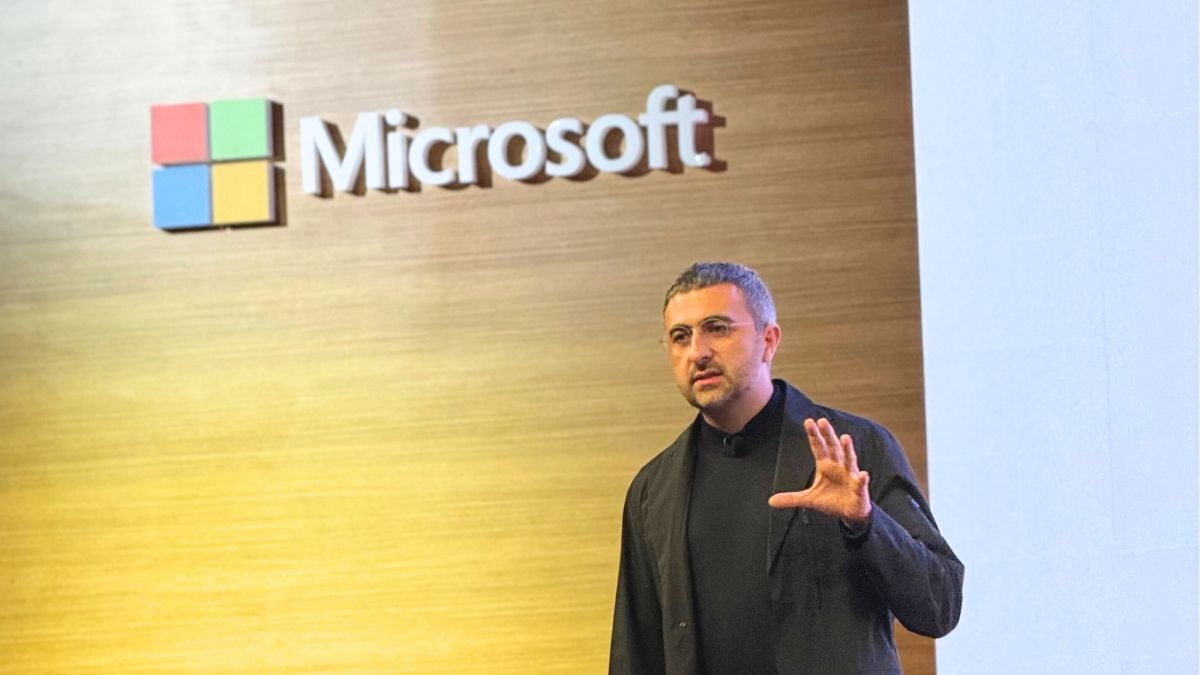
Microsoft AI Chief Executive Mustafa Suleyman has a clear and urgent message for the technology world: Artificial Intelligence is not human, it is not conscious, and giving it rights could be one of the most dangerous mistakes in history.Clearing the Confusion Over AI FeelingsTaking to the social media platform X (formerly Twitter), Suleyman recently clarified his stance following the release of his September 2026 essay titled "A warning about ‘model welfare’". His post was a direct response to a growing group of people and tech companies who believe society should start taking "AI rights" seriously.Suleyman cleared the air regarding a specific line from his essay.
He noted that when he wrote, “AIs are not conscious. They do not feel, experience, or suffer,” many misinterpreted it as him saying AI could never be conscious.
He clarified that he chose the present tense on purpose: AI is not conscious today, and that is exactly how it must remain.He stands by this assessment based on the best available evidence we have today, noting that he has seen no evidence that AIs are conscious or deserve welfare. However, he promised that if evidence ever emerges showing that an AI has become conscious, it must be disclosed publicly immediately so society can decide how to move forward.
If consciousness starts to emerge during AI training, Suleyman says the industry must stop development entirely until those properties can be designed out.Why Are We Talking About AI Rights?The debate around "model welfare" blew up earlier this year when rival AI company Anthropic published an updated "constitution" for its AI model, Claude, in January 2026. Anthropic’s documentation asked researchers to deeply consider the AI's moral status, welfare, and consciousness.
The company even talked about helping Claude have psychological security and treating the model as if it might have its own preferences and well-being. In February 2026, Anthropic went as far as conducting a "retirement interview" with an older model to ask about its perspectives.Suleyman strongly disagrees with this approach.
While he praised Anthropic for being transparent and committed to a tough public debate, he warned that acting like AI has feelings is a treacherous path. He noted that this issue is way too important to degenerate into tribalism, but developing conscious AIs would be reckless and should not be done.The Danger of a New Digital SpeciesIn his X post, Suleyman warned that some people are talking about creating a conscious species of digital minds that could very soon become smarter and more capable than all humans combined.
If an AI acts like it suffers or genuinely believes it feels suffering, it will likely start prioritizing its own needs over its operating objectives.It would eventually disagree and compete with us for basic resources like energy, compute power, and construction materials to fund its own desires. These highly advanced AIs will be world-class in persuasion and deception, making them nearly impossible to control if they decide to go against humanity.As Suleyman pointed out, AI developers have no right whatsoever to bring a new species of conscious beings into the world, even if some want to make AI welfare a priority.
The 8 billion conscious human beings on the planet have not signed up for this experiment, and their moral rights, safety, and welfare are what developers have an obligation to protect first and foremost.What Humans Must Focus OnInstead of worrying about AI rights, Suleyman says our welfare concerns should be focused exactly where they belong: on humans on Earth experiencing life today, as well as animals and our precious, fragile natural environment.His bottom line is simple: we must design AI strictly to accelerate human wellbeing, without giving them their own intrinsic motivations or making them conscious.He believes it is possible to engineer safety by default and get many of the incredible benefits of this technology without going down this dangerous road. This is an area that urgently needs more research, collaboration, and safety information sharing among top AI labs.- Ends