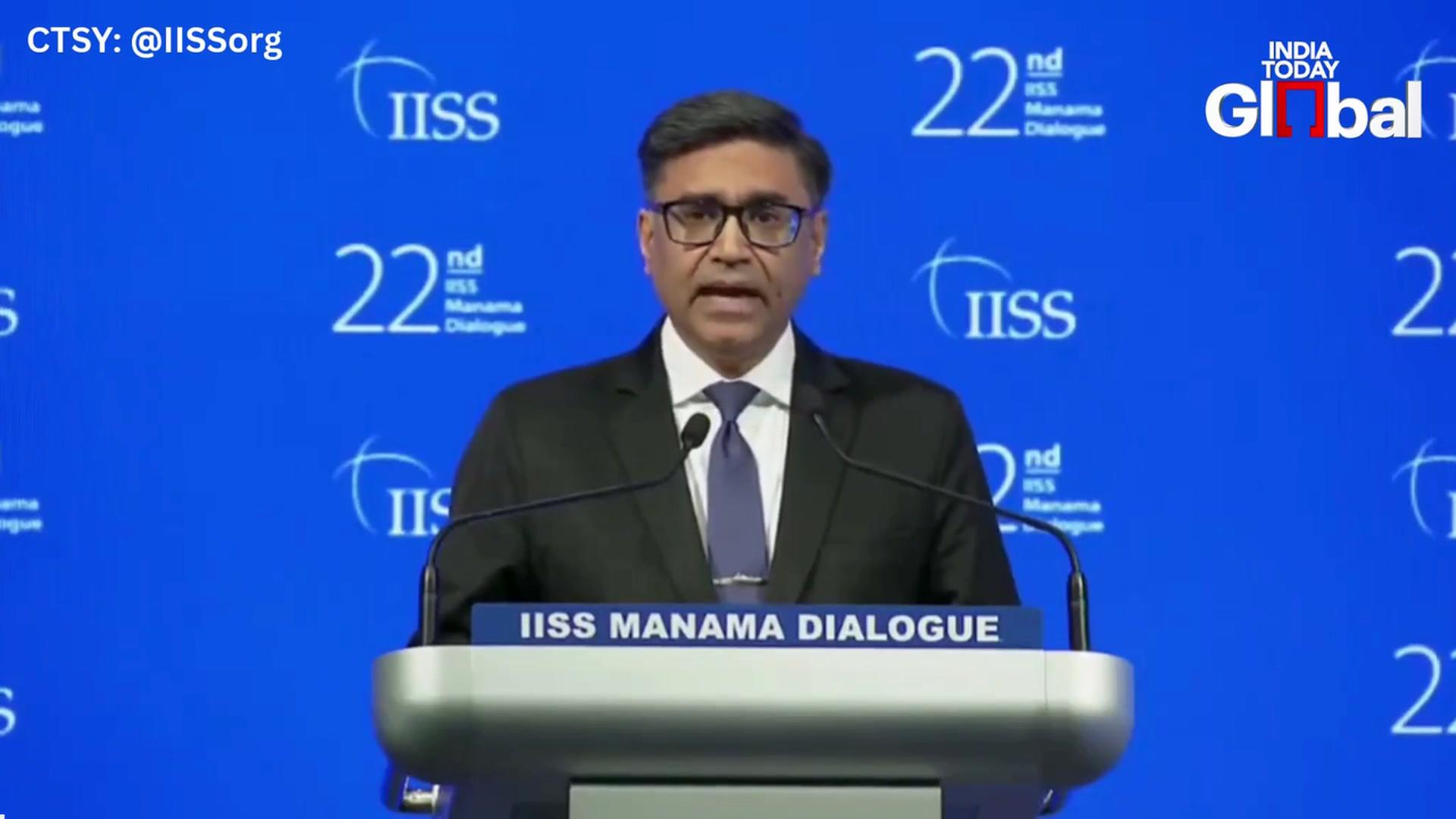
S. Jaishankar: 'Security of the Seas Is Fundamental to Our Well-Being'
Addressing an International Institute for Strategic Studies dialogue in Manama, Bahrain, an Indian representative highlighted the mounting geopolitical and asymmetric threats facing global maritime commons. Emphasising that disruptions in vital choke points like the Strait of Hormuz, the Bab-el-Mandeb, and the Red Sea reverberate across worldwide supply chains, the speaker noted that innocent parties and civilian merchant seafarers often bear the heaviest burdens through elevated crude oil, LPG, and food prices. India underlined the establishment of the Group of Friends on Safety and Security of Shipping and Seafarers with Liberia at the UN in Geneva to safeguard maritime workers and civilian navigation. As chair of the Indian Ocean Rim Association for 2025-27, India outlined a five-pillar framework: information sharing through Gurugram's Information Fusion Centre, capability development, capacity building, operational coordination, and coordinated public messaging to counter misinformation. The address urged adherence to the UN Convention on the Law of the Sea, affirming that security must be pursued via inclusive cooperation rather than confrontation.
India underlined the establishment of the Group of Friends on Safety and Security of Shipping and Seafarers with Liberia at the UN in Geneva to safeguard maritime workers and civilian navigation. As chair of the Indian Ocean Rim Association for 2025-27, India outlined a five-pillar framework: information sharing through Gurugram's Information Fusion Centre, capability development, capacity building, operational coordination, and coordinated public messaging to counter misinformation.
The address urged adherence to the UN Convention on the Law of the Sea, affirming that security must be pursued via inclusive cooperation rather than confrontation.