


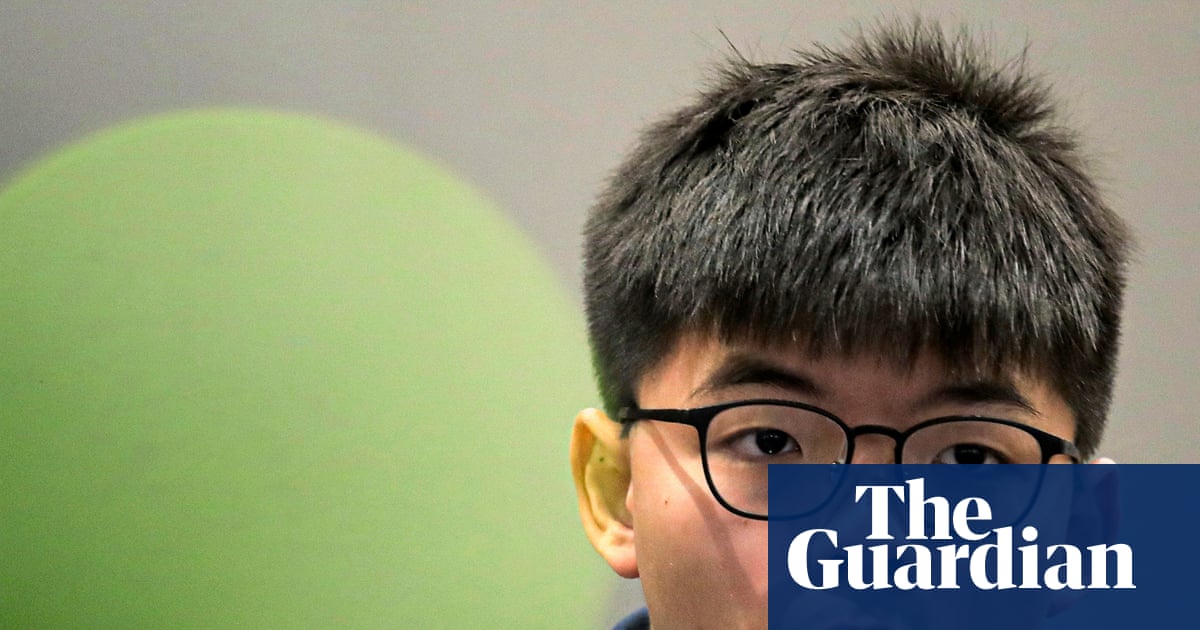
Hong Kong activist Joshua Wong was sentenced on Thursday to 10 years in prison after pleading guilty to “foreign collusion”, his second conviction under a national security law that critics say has been used to silence political opposition in the city.Wong, who rose to prominence as the teenage face of Hong Kong’s 2014 pro-democracy demonstrations, submitted his plea in September. He had been accused of working with the exiled Hong Kong activist Nathan Law to urge foreign powers to impose sanctions, blockades or other hostile measures against China.In his ruling, High court Judge William Tam described Wong’s actions as “grave in nature”.He said Wong had visited the US to seek foreign interference ahead of the national security law’s introduction in 2020, and continued to share posts on social media by Law calling for sanctions after it was enacted.Wong’s role was to “supply his underground support” and “arouse the attention of foreign countries to bolster the cause” of exiled activists, the judge said.He said Wong’s sentence will run concurrently with the remaining term of his previous national security offence.Wong wore a dark blue shirt and thick rimmed glasses in court, and nodded and bowed as supporters waved.The former student leader is already serving a prison term of four years and eight months, imposed in November 2024, for conspiracy to commit subversion for his role in an unofficial primary election.
He has spent nearly six years in detention and had been due to be released in January 2027.Wong, 30, gained international attention during the 2014 Umbrella protests, which paralysed the city’s financial centre and galvanised a generation of young people. In October 2014, he appeared – with his trademark black-rimmed spectacles – on the cover of a Time magazine under the headline: “The Face of Protest”.When protests erupted in 2019 over a proposed extradition bill, Wong was serving a prison sentence for his role in the 2014 demonstrations.
He was released at the height of the protests and immediately took to the streets.The following year, Beijing introduced a sweeping national security law it said was needed to restore stability to the former British colony, but critics say has been used to target political opposition, dissolve civil society groups and silence independent media.