


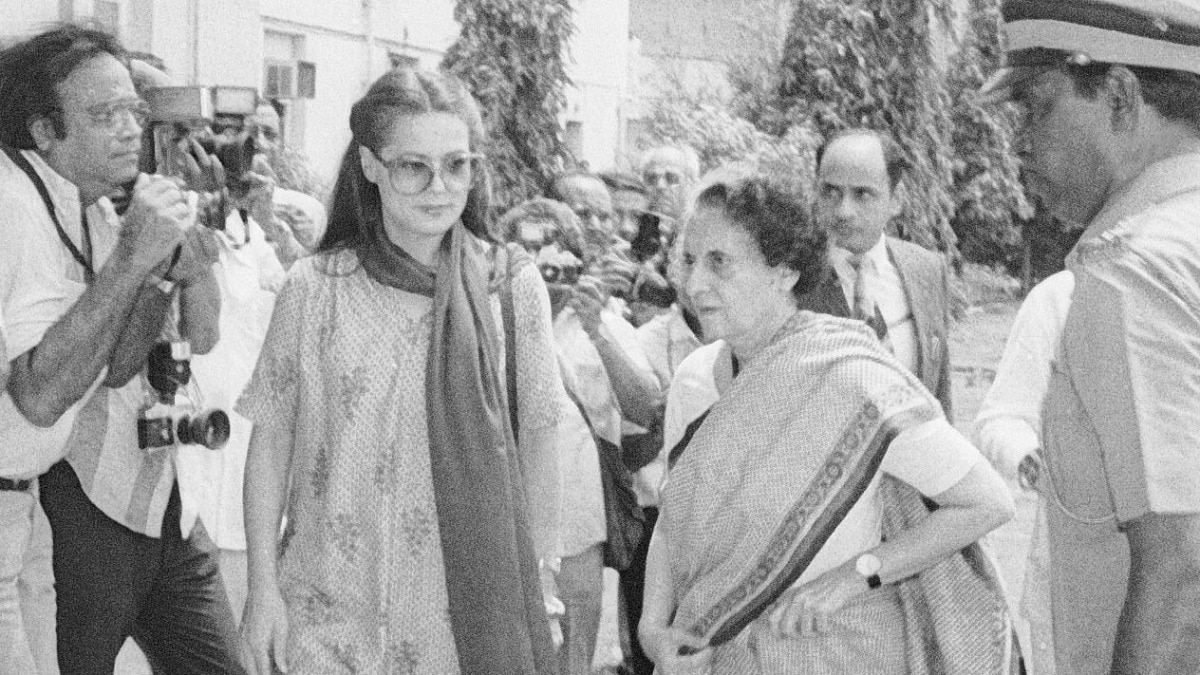
In a freewheeling interview ahead of the release of her memoir, Belonging: A Journey of Love, Sonia Gandhi has spoken at length on how the decision to impose the Emergency divided the family.Sonia Gandhi and former PM Indira GandhiNew Delhi,Nov 7, 2026 17:47 ISTThe Emergency, imposed by former Prime Minister Indira Gandhi, remains one of the most controversial chapters in the Congress's history. Recalling the turbulent period, Congress leader Sonia Gandhi called the decision a "mistake" and emphasised that keeping Sanjay Gandhi "in check" could have prevented much of the damage that followed its imposition.
In an interview with The Guardian ahead of the release of her memoir, Belonging: A Journey of Love, Sonia said even Indira, her mother-in-law, was never comfortable imposing the Emergency.It is not the first time that Sonia has spoken about the Emergency, a period that saw civil liberties being suspended and a brutal crackdown being unleashed on Opposition leaders and the freedom of the press. In a 2016 interview with Rajdeep Sardesai, Sonia said Indira "felt uncomfortable" with the Emergency, as otherwise she would not have called elections in 1977.
What her latest remarks offer is a more detailed glimpse into the divisions within the family over the decision. Sonia Gandhi during the unveiling of her upcoming book 'Belonging: A Journey of Love' WHEN RAJIV GANDHI, SANJAY DIFFERED ON EMERGENCYIn her interview, where she shared glimpses from her new book, the former Congress president said she believed Indira was a "democrat at heart"."I know that many would laugh at this, but I believe she was never comfortable in the course of the emergency.
I think it was sitting heavy on her," she further said. The Emergency, which lasted for nearly two years (1975-1977), was imposed amid mass protests against Congress governments in several states and the Allahabad High Court ruling Indira's election from Raebareli void.According to Sonia, the decision to impose the Emergency divided the family.
She said while her husband, Rajiv Gandhi, advised his mother to wait for the next election, Sanjay pushed for it. While Sanjay held no Cabinet or government post, he wielded an extraordinary influence over Indira.
In fact, he was then seen as the second-most powerful figure in the country. Sonia said it created tensions within the family as well.Sonia said the final push to impose the Emergency came from Sanjay during a family dinner. "They must be stopped," Sanjay told Indira, referring to the opposition, according to Sonia.
She said Rajiv attempted to confront his mother, but she refused to listen."Keeping Sanjay in check could have prevented much of the damage that followed," Sonia mentions in her book, according to The Guardian. Sonia said her mother-in-law Indira Gandhi was never comfortable imposing Emergency (PTI) 'LOT OF PRESSURE FROM SENIOR LEADERS'However, in another interview with The Hindu, Sonia said that, apart from Sanjay, some "senior Congress leaders" had also put pressure on Indira."There was a lot of pressure from some of her senior colleagues...
There were very few people around her, like Rajiv, who had a different point of view," she said.Sanjay, the younger son of Indira, exercised power behind the scenes during the Emergency, spearheading excesses like forced sterilisation, popularly known as nasbandi, in the guise of population control. His slum-clearance drives across Old Delhi were among the most controversial chapters during the period.Speaking to The Hindu, Sonia said Indira later acknowledged the excesses during the Emergency and apologised as well. "Eventually my mother-in-law began to understand the situation through her own wisdom and took actions to remedy it," Sonia said.The Rajya Sabha MP stressed that she only realised the full extent of what had happened during the Emergency after it was over."Democratic rights had been curtailed, and there was a suspension of habeas corpus, but it was done constitutionally," Sonia said.The book, which will hit the shelves on November 10, revisits her early years in Italy and her own account of her political journey after her marriage to Rajiv Gandhi.- Ends