


One of the key issues Democrats brought up against the Trump administration and the Republican Party in this month’s midterm elections was how they had handled the investigation into convicted sex trafficker Jeffrey Epstein.United States President Donald Trump had pledged to release troves of files on Epstein gathered by the Federal Bureau of Investigation (FBI) and other federal agencies when he was campaigning for president in 2024.Recommended Stories list of 3 itemslist 1 of 3Epstein files with claims against Trump released by US Justice Departmentlist 2 of 3US Congress approves release of Epstein files, set to send bill to Trumplist 3 of 3Epstein, Iran and ‘drain the swamp’: Have Republicans shifted before vote?end of listBut after taking office, Trump administration officials were accused of thwarting efforts to bring transparency to the issue, and Trump himself publicly rebuked the handful of Republican lawmakers who sided with Democrats to force declassification of what federal investigators had uncovered over the years. Some of those lawmakers even lost their seats after Trump withdrew his support and backed primary opponents.Now, Democratic lawmakers, who will control a majority in both the House and Senate beginning in January, say they plan to use legislative powers to confront the Trump administration on Epstein.
As the majority party, Democrats can appoint lawmakers to lead key committees that have the power to issue subpoenas to officials and hold hearings where those officials could be asked to answer questions under oath about the handling of the files.Although Trump could still use his veto power to overrule legislation Democrats might pass, for instance, to mandate further disclosures from the administration, the committees they control will wield considerable investigative power that was previously not exercised by Republicans.On Tuesday, the currently Republican-controlled House Oversight Committee issued findings (PDF) from a 15-month investigation into the federal government’s role in the Epstein investigation. The committee called for specific steps for the Department of Justice to take, including interviewing and re-interviewing key witnesses, and further investigating Epstein’s network of associates.The committee stopped short of calling for investigating any links Trump might have had with Epstein, something Democratic lawmakers have called for.
Instead, the current committee’s report said Democrats on the body were “obsessed with trying to implicate President Trump” and engaged in an “unfounded witch hunt”. The Republican-led body said it “did not identify any documents that would implicate President Trump in any criminal activity related to Epstein and Maxwell”.Incoming Democratic lawmakers expected to chair the House Oversight Committee, as well as the Senate Finance Committee, are already saying they plan to use their powers to demand more answers from the Trump administration.What have lawmakers done so far?In November 2025, lawmakers passed the Epstein Files Transparency Act, in a notably bipartisan fashion: just one member of the House voted against the law, and no one in the Senate opposed it.The law called on the Justice Department to release “all unclassified records, documents, communications and investigative materials” it had related to the Epstein investigation and prosecution of the sex offender.
Those documents also had to be made available in “a searchable and downloadable format”.Millions of documents were eventually released, but many were heavily redacted, and lawmakers who had access to the unredacted versions said some of that information deserved to be public, and more files were in the possession of the Trump administration.Democrats on some committees have already been involved in the Epstein investigation in some way, and even as minority members, some have been able to issue reports to at least call for more inquiries.Which House Committees are likely to lead further investigations?In October, Democrats on the House Judiciary Committee released a 53-page report (PDF) specifically looking into ties between Trump and Epstein. Trump has denied having any serious contact with Epstein, and said he had no part in the convicted sex-trafficker’s activities.Democrats say they based their report on publicly available information, as well as interviews with women who they say were abused by Epstein and Trump.
Five women, the report claims, accused Trump of “rape or sexual assault in Epstein’s company or presence”.Trump has denied those allegations.The report also claims the FBI was told by one witness that Trump was introduced to his wife Melania Trump by Epstein and that the president was involved in Epstein’s sex-trafficking network. It also claims Attorney General Todd Blanche instructed Epstein’s associate Ghislaine Maxwell not to speak about ties between the sex trafficker and Trump.
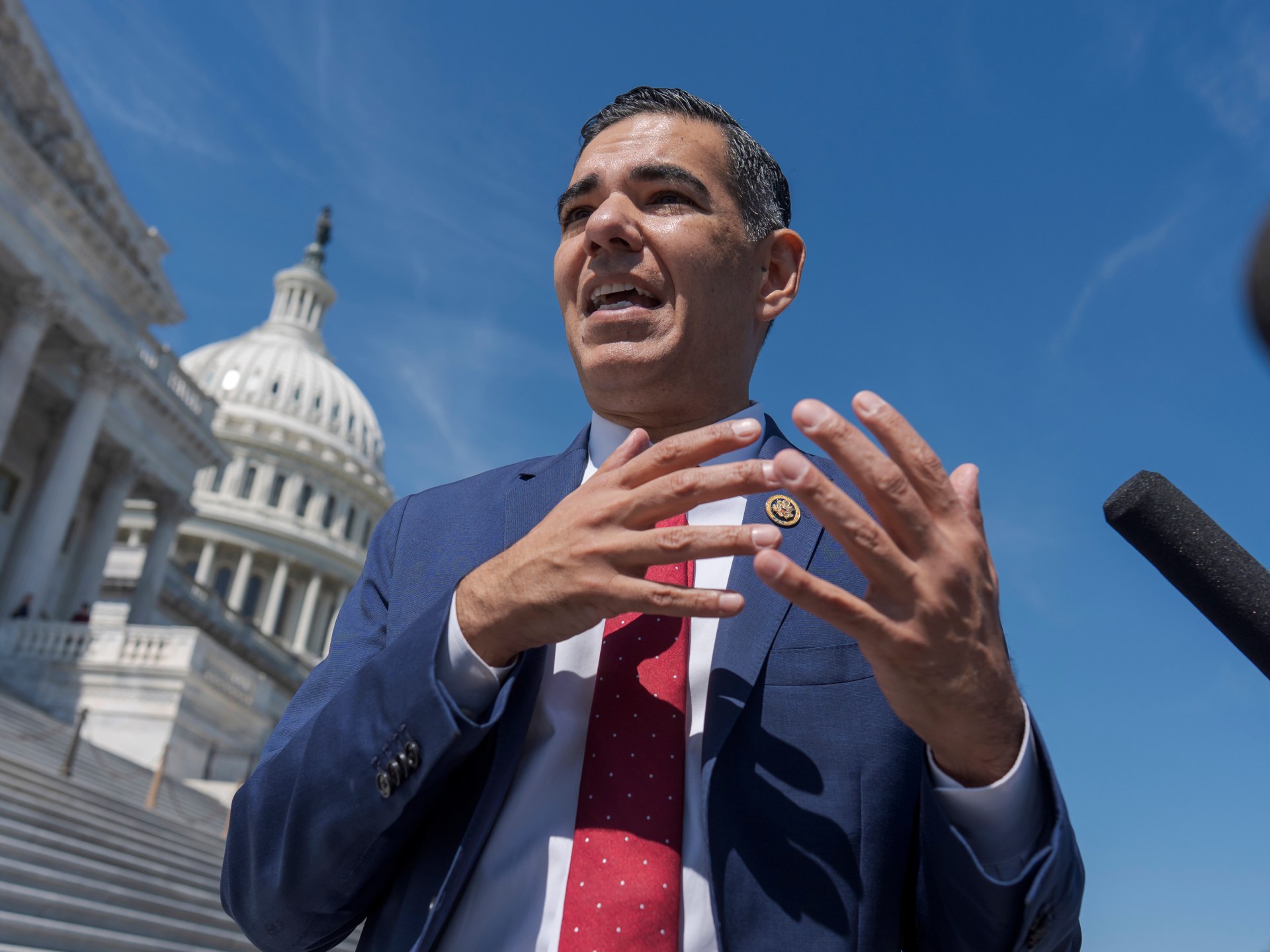
Blanche has denied doing so.Democratic Representative Robert Garcia, who is expected to take over as chair of the House Oversight Committee, has said he intends to pursue officials like Blanche and others as part of his investigation. The committee, which acts as a watchdog, has a broad mandate to look into the work of federal agencies, like the Justice Department.Garcia said this week on US television network MS NOW that he plans to use subpoena powers to force Blanche to answer questions. “He doesn’t want to answer questions, because he’s scared, because he knows that he’s been involved in leading this White House coverup related to the Epstein files,” Garcia said.On Tuesday, the currently Republican-led House Oversight Committee, which is led by Republicans, called on federal authorities to review whether banks failed to properly deal with suspicious transactions involving Epstein.What will Senate Democrats look to do?One committee in the Senate that is likely to take action is the Finance Committee, whose expected chair, Democratic Senator Ron Wyden, has said he plans to follow up on findings in his own report on the Epstein scandal.In August, Wyden’s office issued a 67-page report (PDF) on how major banks in the US and the US Department of the Treasury allegedly failed to act on suspicious transactions by Epstein and his associates, who moved money around the globe as part of their trafficking network.“Wall Street banks enabled Epstein for years.
By failing to report—or choosing not to report—his suspicious financial transactions to federal law enforcement, these banks allowed Epstein to send cash payments and wire transfers to his victims, friends, and collaborators around the world,” the report found.Major banks including JPMorgan Chase, Deutsche Bank, and Bank of America, Wyden’s report claims, moved more than $1bn around for Epstein and his network in thousands of transactions over the years that should have been reported as possible criminal activity.“I have a list of Wall Street bankers who need to answer questions about why they looked the other way while Epstein and his cronies sent millions of dollars through their institutions to facilitate sex trafficking women and girls,” Wyden said in a statement last week. “As Finance Committee chair, every tool will be on the table to get answers.”