


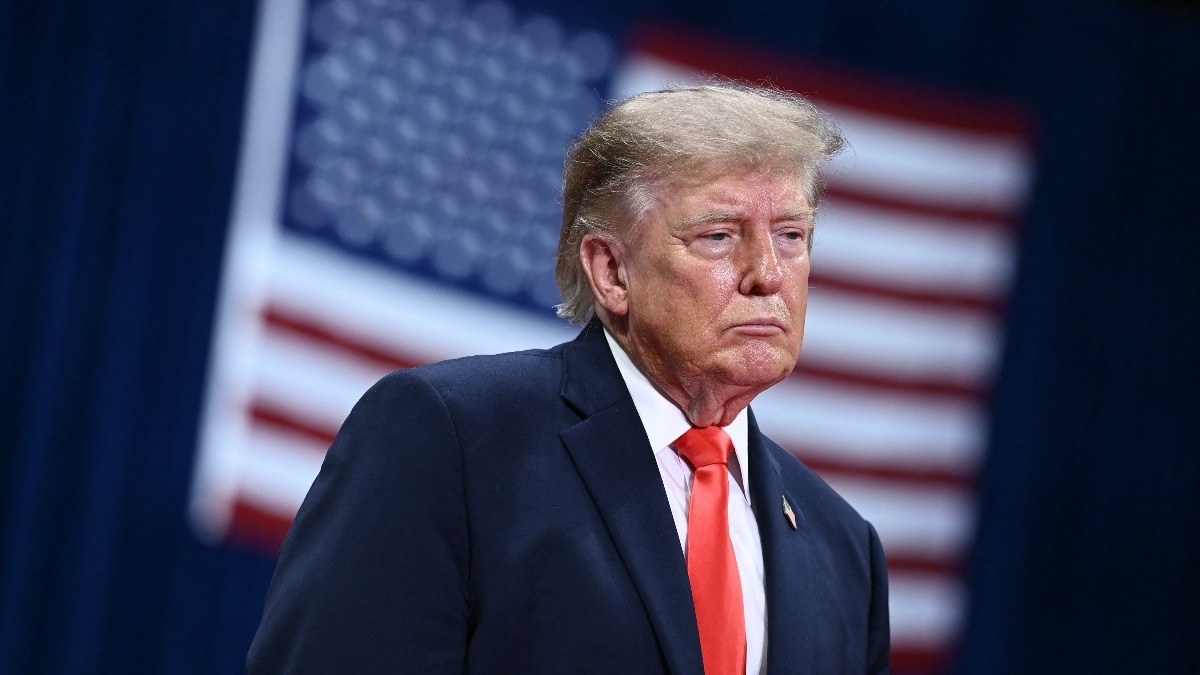
Early voting allows registered voters to cast their ballots before Election Day, either by visiting designated polling stations or through mail-in voting. While all 50 states offer mail-in voting, most also allow voters to cast their ballots in person ahead of the election.US President Donald Trump speaks at a midterm campaign rally at the Ocean Center in Daytona Beach, Florida on October 30, 2026. (Photo by Brendan SMIALOWSKI / AFP) More than 53 million Americans have cast their ballots ahead of the 2026 US midterm elections, marking a significant surge in early voting compared with the previous midterm contest in 2022.
The high turnout comes amid closely contested races that will determine control of Congress for the remainder of President Donald Trump's second term, with Democrats showing stronger early voting participation than Republicans, reported many news platforms including The Guardian.According to an analysis by the University of Florida, 53.14 million people had voted early as of 6:56 am Eastern time (11:56 GMT) on Sunday. This included around 29 million in-person votes and 23 million mail-in ballots, out of approximately 210 million registered voters.The early voting figure is already significantly higher than the 46 million recorded at the same stage of the 2022 midterm elections.
Democrats have also recorded a lead in early voter participation, with more than 11 million registered party members having voted, compared with approximately 8 million Republicans. The surge comes as the latest national polls suggest Democrats have an advantage, with 51.5 per cent support against 43.1 per cent for Republicans.
Trump's tariff policies and his decision to launch a war alongside Israel against Iran have emerged as potential liabilities for the Republican Party, with both blamed for contributing to the cost-of-living crisis.WHICH STATES HAVE RECORDED THE BIGGEST SURGE?Texas, a key battleground state, has witnessed a particularly sharp increase in early voting. More than 7 million people have already cast their ballots there, over 1.5 million more than the early votes recorded during the 2022 midterms, according to the University of Florida analysis.
South Carolina has also seen a significant increase. According to an Associated Press analysis of polling data, early voting in the state has risen 83 per cent compared with the corresponding period in 2022.
The increase is notable as Donald Trump won South Carolina by nearly 18 percentage points in the 2024 presidential election. The state has open contests for governor and the US Senate this year.In Kansas, early voting has increased 34 per cent, with approximately 83,000 more ballots cast than at the same point in the previous midterm election.
Republican Senator Roger Marshall is facing Democratic candidate Adam Hamilton, a Methodist minister.Maine has recorded a 44 per cent increase in early voting, with Republican Senator Susan Collins facing Democratic candidate Troy Jackson, a former president of the state Senate.Michigan has also witnessed a substantial rise, recording approximately 409,000 more early votes than at the corresponding stage in 2022, representing a 32 per cent increase.WHY ARE SO MANY AMERICANS VOTING EARLY?Early voting allows registered voters to cast their ballots before Election Day, either by visiting designated polling stations or through mail-in voting. While all 50 states offer mail-in voting, most also allow voters to cast their ballots in person ahead of the election.The number of states offering early in-person voting has expanded considerably over the years, from 24 in 2000 to 47 in 2026, in addition to Washington, DC.
However, the duration of early voting, eligibility requirements and procedures differ from state to state.There are several reasons behind the growing preference for early voting, according to the University of Maryland's Center for Democracy and Civic Engagement (CDCE).Some voters find it more convenient to cast their ballots before Election Day because of work schedules, personal commitments or other logistical considerations. Others are mobilised by election campaigns and community outreach efforts to vote early.The CDCE has also pointed to anxiety surrounding elections as a factor, with many voters preferring to complete the process early rather than wait until polling day.Some initiatives seek to make voting a community experience through events such as 'Parties at the Polls', which encourage participation by creating a more celebratory atmosphere at polling locations.However, early voting numbers alone do not reveal which candidates voters have supported or guarantee the eventual election outcome.WHAT HAS TRUMP SAID ABOUT MAIL-IN VOTING?Mail-in voting has emerged as a major political flashpoint ahead of the midterms, with Trump repeatedly questioning its security and making debunked claims of widespread electoral fraud.The US President, who has himself voted by mail, has repeatedly blamed mail-in ballots for his defeat in the 2020 presidential election.
He and his supporters also opposed changes introduced during the COVID-19 pandemic to expand access to mail-in voting.Mail-in voting has been in place in the US for decades and has been found to increase voter participation. It currently accounts for approximately a third of all ballots cast in the country.The rules governing the process vary across states.
In eight states, election authorities send mail-in ballots to all registered voters, who can return them before the prescribed deadline. In other states, voters must request a ballot before receiving one.Voters can generally return completed ballots through the postal service or designated election drop boxes.
However, deadlines differ. Some states require ballots to reach election offices by Election Day, while others accept ballots postmarked by that date even if they arrive later.Eight states, California, Colorado, Hawaii, Nevada, Oregon, Utah, Vermont and Washington, along with Washington, DC, conduct all elections entirely by mail.
Other states permit mail-in voting for certain smaller elections.TRUMP'S MAIL-IN VOTING ORDER FACE LEGAL CHALLENGESIn March, Trump signed an executive order directing the US Postal Service to take control of certain aspects of mail-in voting, including the design of new envelopes carrying special barcodes. The proposed system was intended to help the federal government verify that ballots came from eligible voters.The move would have required states to adopt a uniform envelope format within a relatively short period ahead of the midterm elections.Democrats and voting rights activists challenged the executive order in multiple courts, triggering a series of legal battles and conflicting rulings between May and August.Last month, the US Supreme Court rejected Trump's attempt to introduce the proposed mail-in voting restrictions before the November midterms, dealing a setback to his administration's efforts to tighten federal oversight of the process.The latest legal battle came on the eve of Election Day, when the Supreme Court also rejected the Trump administration's emergency request to stop California from counting mail-in ballots from more than 20,000 registered voters whom federal officials suspected of being non-US citizens.The court's decision allowed California to proceed with counting the disputed ballots, adding another legal flashpoint to an election already marked by intense political divisions.- Ends