


The Democrats’ sweep of Congress may make it easier for Israel’s splintered opposition to overcome deep internal divisions and form a coalition government, by increasing the urgency of unseating Benjamin Netanyahu, who has associated himself so closely with Donald Trump’s Republicans.But as Israel took stock of the results, there was also a sense that the elections marked a longer-term shift in US politics that will make the job of any new Israeli leader far more difficult.The United States provides Israel with critical military and diplomatic support, so nurturing bipartisan ties was the cornerstone of foreign policy for decades. Netanyahu ripped up that commitment to throw his lot in with the Republicans in general and Trump in particular.The opposition had always attacked his decision as ill-judged.
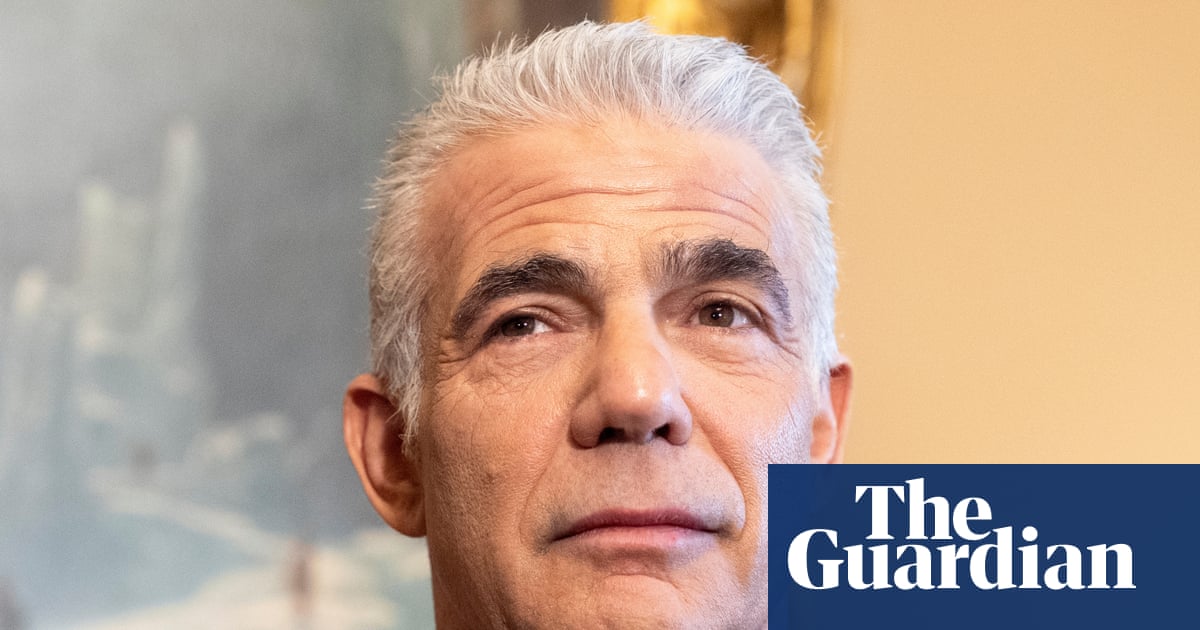
By the end of the week, they were warning that it was positively dangerous.“These people aren’t against Israel,” prominent opposition politician Yair Lapid said of incoming Democratic lawmakers, urging his country to rebuild bridges. “They’re mainly against Netanyahu – for them, anything connected to him is toxic.”“The easiest thing is to scream that ‘America is lost,’ because if it’s lost, you don’t have to work. That’s just not true.
Not at all.”Lapid laid out a plan to “rebuild trust” in the US, but it perhaps did more to demonstrate the scale of the problem than reassure Israelis.His proposal of a transatlantic charm offensive by officials of a prospective new government drew a swift and sharp rebuke from the New York congressman-elect Brad Lander.Lander, a Democrat who is Jewish and describes himself as a liberal Zionist, was detained in the occupied West Bank last month while joining Palestinians trying to harvest olives.“Minister Lapid: As someone who won a seat in Congress last night, and who cares about Israel: you’re not listening to what American voters – Jewish and non-Jewish – are saying,” Lander wrote in a direct response.“We aren’t starving for a barnstorming tour. We’re hungry to see respect for international law and human rights.”In his exchange with Lapid, Lander also highlighted the arrest of journalist Abed Abu Shehada, a Palestinian citizen of Israel, as an example of how Israel violates international law.
He drew a direct link with the ICE “regime of detention without charges, based on secret evidence, designed to intimidate and chill speech” that he said was rejected by US voters.Abu Shehada was reportedly taken from his home by 15 masked security officials in a night-time raid, without an arrest warrant. Interrogators have only questioned him about a podcast interview with a public figure, lawyers acting for Abu Shehada said.On Friday, Lander and two other incoming Jewish members of Congress, Daniel Bliss and Scott Wiener, wrote to Israel’s ambassador to the US calling for the immediate release of Abu Shehada.“Detaining a reporter for conducting an interview — the only issue that interrogators questioned him about — is a violation of international law,” Lander said when he published the letter. “It comes at a time when senior Israeli officials are trying to delegitimize the participation of Palestinian citizens in Israel’s recent elections.”Nor do Israel’s problems end with angry Democrats.
The wounded Republican establishment lost no time looking a few thousand miles away to find reasons for the collapse of its voter base.Soon after the election results came in, the vice-president, JD Vance, put “our relationship with Israel” on a short list of reasons for voter fury, and on election day Trump made a last-ditch attempt to woo voters with a pledge to cut off $4bn (£3bn) in annual military aid to Israel.The announcement caused panic in Israel’s defence establishment. “When the commander of the Israel air force hears something like that, he might slit his wrists,” one official told Channel 12 news. “Where are we going to come up with 15 billion shekels every year, and what does that mean for Israel’s future defence budget?”Netanyahu only responded to Trump’s electioneering on Friday with an attempt to spin the cut as a joint decision reflecting Israel’s economic strength. It demonstrated a “move from aid to partnership”, his office said in a statement.Netanyahu has long flaunted his relationship with Trump, his fluent English and experience in the US, presenting himself as the only man with the international standing to guarantee Israel’s security in a hostile world.After Tuesday’s US election, he looks more like an agent of its destruction to many in Israel. “One thing is clear: we are losing America,” Ben Caspit wrote in Ma’ariv, a daily newspaper.“This isn’t a process; it isn’t happening in stages; it is happening all at once.
It is an avalanche. It is a reverberating collapse of the foundation of Israel’s national defence doctrine.
This isn’t a decree of fate. It is a decree of Netanyahu.”Some advocates for change inside Israel found cause for hope in the Democrats’ victory, if Israel’s opposition can turn their mandate for change into a new government.
They won 67 seats in the 120-seat Knesset, but more than a quarter went to Palestinian citizens of Israel, and some of the Jewish Israeli opposition parties have ruled out sitting with them.US administrations have for too long equated support for Israel with blind support for its government, said Nadav Tamir, a former senior Israeli diplomat in the US who is now executive director of J Street Israel.That consensus is cracking, but the majority of lawmakers from both parties still see Israel as a key US ally in the Middle East, he wrote in the Times of Israel.External pressure from those who support its security but see current policy as self-destructive might push the country towards necessary change, including a resolution of the Israel-Palestine conflict.“Perhaps this will be the paradox of the new [US] Congress,” he wrote. “It will be less willing to define support for Israel as automatic alignment with every policy of its government, but precisely for that reason, it may offer Israel more meaningful support in breaking out of the cycle of wars and building a future of security and prosperity.”