


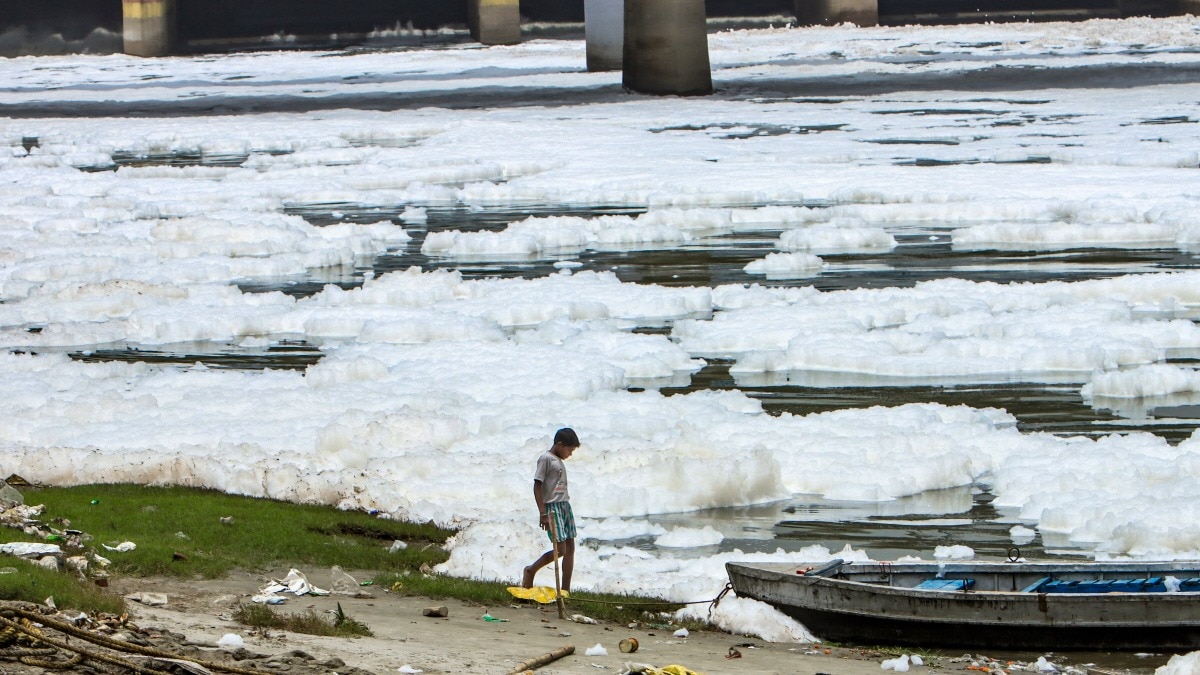
Toxic foam covered the Yamuna near Kalindi Kunj, prompting cleaning operations. Its return underscores persistent pollution from untreated sewage and industrial discharge.Visuals showed white froth covering the river's surface, renewing concerns over pollution ahead of winter, when such foam frequently appears.
A thick layer of white toxic foam was seen floating on the Yamuna near Kalindi Kunj in southeast Delhi on Monday, prompting cleaning operations along the affected stretch, officials told news agency Press Trust of India.Visuals showed white froth covering the river's surface, renewing concerns over pollution ahead of winter, when such foam frequently appears. A similar layer of froth was reported at the Kalindi Kunj barrage on October 23.The foam is mainly linked to untreated sewage and industrial waste containing detergents and other chemical pollutants being discharged into the river.
Waste from washing activities along the river also contributes to the problem.Foam forms when soap-like substances in detergents and other pollutants mix with water and trap air bubbles. The churning of water near barrages, particularly where it falls from a height, makes the process more intense.
Experts said lower winter temperatures make the bubbles more stable, allowing the foam to build up and remain on the river's surface for longer.The Delhi Jal Board uses chemicals to control the accumulation of froth during winter, particularly ahead of Chhath Puja, when devotees usually gather along the river for religious rituals around November every year, according to PTI. The board said it has conducted cleaning operations at Kalindi Kunj since 2022 and set up two camps to store material left over from the previous year's drive.Experts, however, said these measures remove the visible foam but do not address the underlying pollution, as untreated sewage and industrial discharges continue to affect the Yamuna's water quality.The latest cleaning operation was launched after toxic foam again covered a stretch of the Yamuna, highlighting the recurring impact of untreated sewage, industrial waste and other pollutants on the river.- Ends