


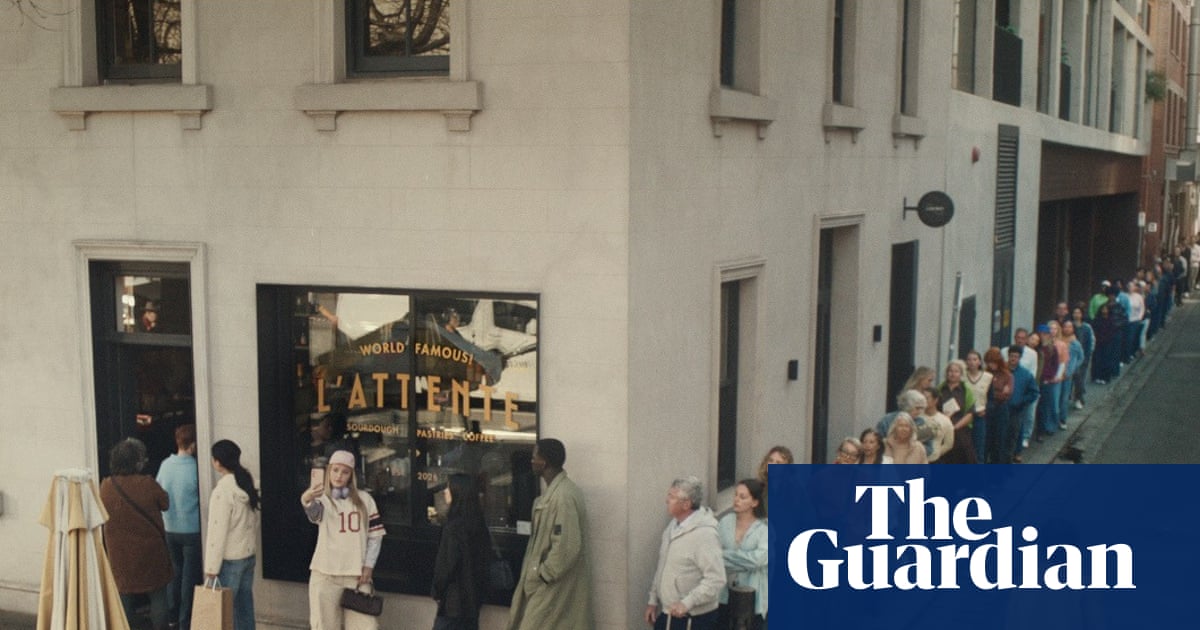
Research shows “tourists hate themselves” – which is exactly why the marketing flacks at Tourism Tasmania are telling them to stay away from the island state.Its new campaign declares the island state is “not really for tourists”, enlisting former SBS newsreader Lee Lin Chin to help sell the tongue-in-cheek campaign, based on the idea that Australians prefer identifying as a “traveller” rather than a “tourist”.Sign up for the Breaking News Australia emailIts centrepiece is a short video of a man being pointed to the back of an endless queue for a “world famous” pastry. He eventually abandons the line to find solitude in the Tasmanian outdoors.Chin, who lives mostly offline without a mobile phone, also fronts videos exploring the walking trails on her visit.Tourism Tasmania’s CEO, Sarah Kingston Clark, said the campaign was deliberately wry rather than anti-visitor, to reflect the “tensions” of modern travel.Those tensions play out in the research, Prof Can-Seng Ooi, the professor of cultural and heritage tourism at the University of Tasmania, suggested.‘Instead of the cold north, we are talking about the cold south … it’s a quiet place, time slows down,’ says Prof Can-Seng Ooi.
Photograph: Tourism Tasmania“Studies have shown that tourists hate themselves,” he said. “They want to avoid each other.”skip past newsletter promotionafter newsletter promotionOoi identified stressed people yearning for “quietness” as the campaign’s target audience, especially those living in urban cities on the mainland.“It taps into the type of tourist people want to be,” Ooi said. He added that people prefer to view themselves as “travellers” because of the negative connotation of “tourist”.Ooi spent 20 years living in Scandinavia, researching how tourism, culture and heritage contributes to the development of regional destinations.“The message is very Scandinavian, even the imagery: the sauna, the vinyl records, the books and so on,” Ooi said. “Instead of the cold north, we are talking about the cold south … it’s a quiet place, time slows down.”Char-lee McLennan, an associate professor from QUT’s school of management, said the campaign used “an element of reverse psychology” that could benefit regional economies by steering visitors beyond established hotspots.Prof David Waller, a marketing expert with UTS, said Tasmania’s “Come down for air” theme was less “anti-tourist” and “more anti-overcrowded, line-joining, tourist destinations”.“Lee Lin Chin is adding humour to the message,” he said. “Lee Lin Chin is an icon – intelligent, avant garde and [she has a] dry sense of humour.”But, McLennan said, the campaign’s success depends on whether the real experience of visiting Tasmania lives up to its promise as well as delivering meaningful economic benefits to regional communities.