


Jobs have increased, GDP has grown, incomes have risen and the cost of living has gone up. But farmers say their earnings have not kept pace with this growth, even as land prices and the cost of farming have increased.Experts say shift needed from rice to pulses and oilseeds to reduce import dependence.
India's economy has expanded over the past three decades. Jobs have increased, cities have grown, incomes have risen and the cost of living has gone up.
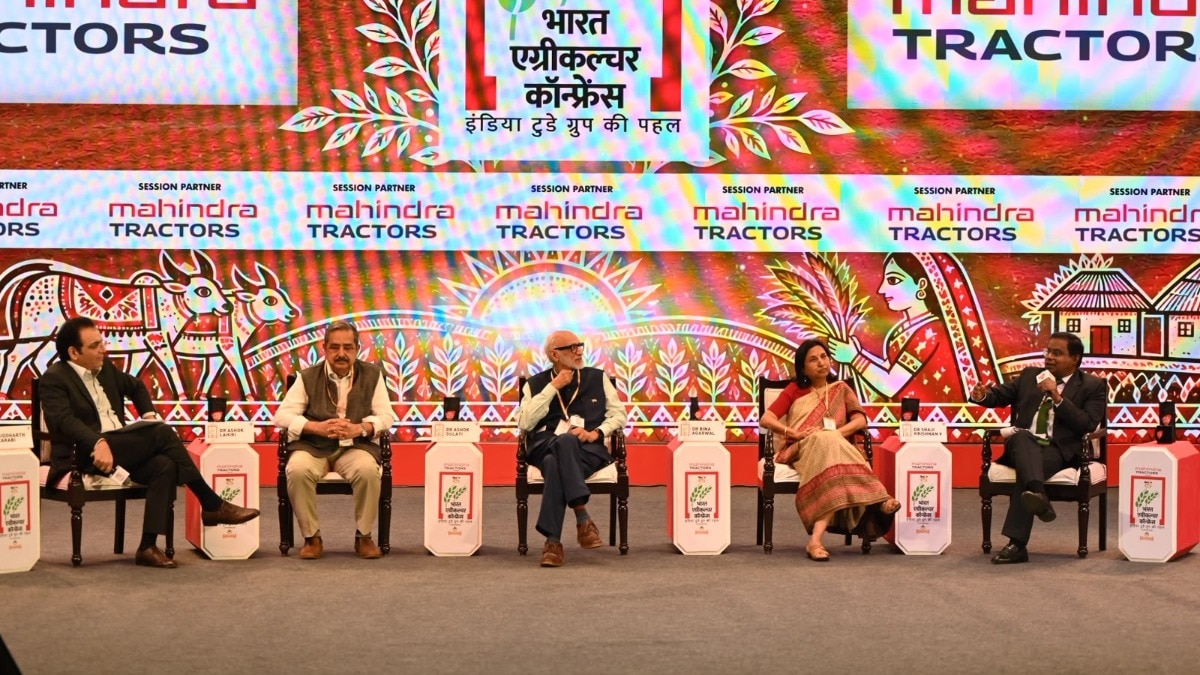
But farmers say their earnings have not kept pace with this growth, even as land prices and the cost of farming have increased.This was the central question at the India Today Kisan Tak Conclave 2026 session titled 'Moolya Mantra: Fasal Guni, Aay Doguni', where four experts discussed why farmers' incomes have not risen enough and what needs to change.The discussion featured Dr Ashok Lahiri, Vice-Chairman of NITI Aayog; Dr Ashok Gulati, Infosys Chair Professor at ICRIER; Dr Bina Agarwal, former Director of the Institute of Economic Growth; and Dr Shaji Krishnan V, Chairman of NABARD.Lahiri said India's agricultural challenge was closely linked to low productivity and the large number of people dependent on farming. "Right now, 46% of our labour is in agriculture. And the GDP from agriculture is around 16-17%.
So if half the people are working at 16-17%, then the productivity and income will decrease," he said.He outlined two ways to address the problem: raising productivity in agriculture and creating opportunities for some agricultural workers to move into industry and services. "One solution is to increase productivity. Productivity means getting more money from agriculture.
And secondly, we have to bring industrial services to some farmers," Lahiri said.INDIA NEEDS TO RETHINK WHAT IT GROWSDr Ashok Gulati argued that higher production alone would not improve farmers' incomes if agricultural policies continued to encourage surplus production of certain crops.He pointed to India's rice surplus even as the country imports large quantities of pulses and edible oils. He said the existing subsidy structure favours rice, wheat and sugarcane, leaving pulses and oilseeds at a disadvantage."India is the largest rice producer in the world.
And we are the largest exporter. In spite of that, 81 crore people are being given free rice or wheat.
And the rice in our warehouse is five times more than the buffer stock norm," Gulati said.He argued that the country needs to shift some of its agricultural area towards pulses and oilseeds, which it currently imports."We are exporting rice from here and importing pulses and oilseeds from there. We are the largest importer of edible oil," he said.Gulati suggested shifting at least 5 million hectares away from rice cultivation towards pulses and oilseeds.
He also called for a change in the incentive structure, arguing that subsidies should encourage farmers to grow crops where India faces import dependence.He also questioned policies that restrict agricultural exports to keep domestic food prices under control, saying farmers can lose out when they are prevented from getting better prices for their produce.SMALL FARMERS NEED TO WORK TOGETHERDr Bina Agarwal said the structure of Indian agriculture itself makes it difficult for many farmers to improve productivity and earnings. She pointed out that 86% of farmers have less than two hectares of land, while 70% have less than one hectare."If you look at the productivity of farmers, 86% of them have less than 2 hectares of land.
70% of them have less than 1 hectare of land," she said.Agarwal argued that collective farming could help small farmers overcome some of the limitations of fragmented landholdings. She cited NABARD's Joint Liability Group model, under which groups of six to 10 farmers can access subsidised credit without collateral.Giving Kerala as an example, she said around 73,000 such groups had been formed in the state."Their productivity is twice that of a single farmer's family.
Their net returns are 1.6 times per hectare," she said.Agarwal also stressed that women must be central to discussions on agricultural productivity and income, pointing to their role in farming, livestock and fisheries.HIGHER PRODUCTION DOES NOT ALWAYS MEAN HIGHER INCOMENABARD Chairman Dr Shaji Krishnan V said the focus must shift from increasing output alone to improving the income farmers actually retain."Net income means if the cost increases along with the income, the net income will not increase. We have to see the net income part," he said.Krishnan said farmers needed to produce more efficiently, reduce input costs and retain a larger share of the value generated from their produce.He also called for greater diversification towards pulses and oilseeds, pointing out that these crops require less water.
India imports more than $25 billion worth of pulses and oilseeds, he said, while its agricultural exports account for around 2.5% of global exports.Krishnan also highlighted the need to strengthen Farmer Producer Organisations (FPOs), particularly in processing, value addition and marketing."How can we retain a higher share of the farmer's production and income? That is important," he said, adding that farmers needed to move beyond production and become part of the higher-value stages of the agricultural supply chain.He also called for some form of income protection, as higher production can expose farmers to the risk of falling prices.The discussion highlighted that improving farmers' incomes will require more than increasing crop output.
From changing crop incentives and supporting collective farming to reducing input costs and expanding value addition, the experts argued that the focus must shift towards what farmers actually earn and retain from agriculture.- Ends