


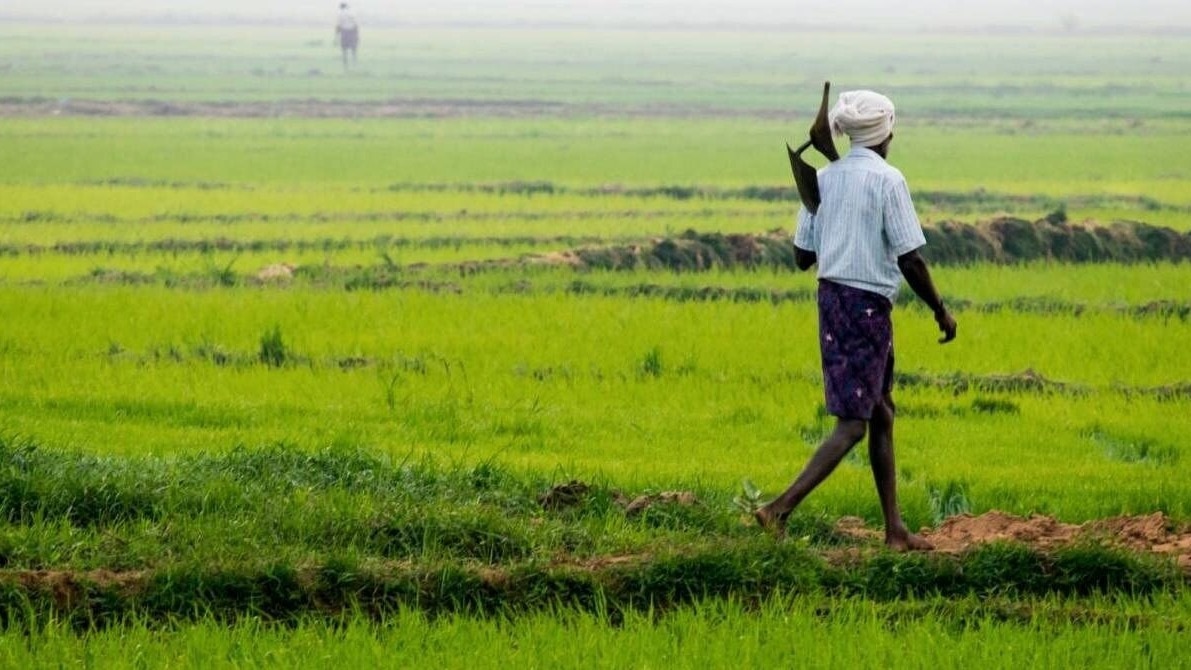
ICAR-IISS launched e-FARM to provide soil-based fertiliser advice to Madhya Pradesh farmers. The app could reduce unnecessary input costs while supporting crop-specific nutrient management.e-FARM app is guiding Madhya Pradesh farmers to get better yields.
How much urea does a wheat field actually need? Farmers often go by past experience or follow what others nearby are doing.
But applying more urea, diammonium phosphate (DAP) or other fertilisers than a crop needs can raise costs and affect soil health. A mobile app developed in Bhopal aims to help farmers make that decision using soil data.The ICAR–Indian Institute of Soil Science (IISS) developed the e-FARM app to recommend fertiliser doses based on a field’s soil and the crop being grown.
Union Agriculture Minister Shivraj Singh Chouhan launched it on April 11, 2026, at the Unnat Krishi Mahotsav in Raisen, Madhya Pradesh.Prime Minister Narendra Modi highlighted the idea at the Kisan Tak Bharat Agriculture Conference on November 12, calling for wider use of mobile technology to assess soil health and apply fertiliser according to need.HOW DOES E-FARM WORK?E-FARM, short for Fertilizer Advisory and Resource Management System, uses data on soil properties such as nitrogen, phosphorus, potassium and organic carbon. It takes into account the crop and the farmer’s target yield to recommend how much fertiliser to apply.
Chouhan said at the launch that farmers could use their smartphones in the field to check nutrient levels and get fertiliser advice. The app allows farmers to upload a photo of their field.
Its recommendations draw on scientifically tested soil samples, location data and digital soil maps.WHY DOES SOIL MAPPING MATTER?Soil can vary even within the same field. One patch may have enough nitrogen, while another may need more.
If a farmer applies the same dose everywhere, some parts may get more fertiliser than they need. Digital soil mapping uses the results of soil tests and records where samples were collected.
That helps show how nutrient levels vary from one location to another and gives farmers a basis for adjusting how much fertiliser they use.At launch, ICAR listed five crops for farmers in Madhya Pradesh: soybean, maize, paddy, wheat and gram (chana).WHAT DID THE MAIZE TRIAL FIND?IISS tested the system on maize at three sites on its research farm, with a yield target of 5,000 kg per hectare. The sites recorded yields of 4,800 kg, 4,400 kg and 5,400 kg per hectare.
The average was 4,867 kg per hectare, or 97.3 per cent of the target.The trial showed how close the three sites came to the yield target using the recommendations. For farmers, the immediate use of the app is to see where they can cut back on unnecessary fertiliser and where their crop may need more.The app, web portal and further details are available on the ICAR–Indian Institute of Soil Science website.- Ends