


It's that time of the year. Delhi-NCR is again under a blanket of smog, and the Air Quality Index (AQI) continues to climb.
The sky is turning yellow, the air is getting harder to breathe, and pollution levels are entering the hazardous category. And no.
Staying indoors will not help you protect your lungs. In fact, studies have found that indoor air can sometimes be more polluted than outdoor air.
Pollution from outside can enter your home through doors and windows. Then there are cooking fumes, dust, cleaning products and other everyday activities that make indoor air dense with pollutants.
One way to get a breather — with clean air – is by using an air purifier. And if you're planning to buy one this winter, don't just go for the most expensive model or one with fancy features.
Not every air purifier can handle pollution levels like we see in Delhi-NCR or other metro cities. So, what should you look for before buying one?
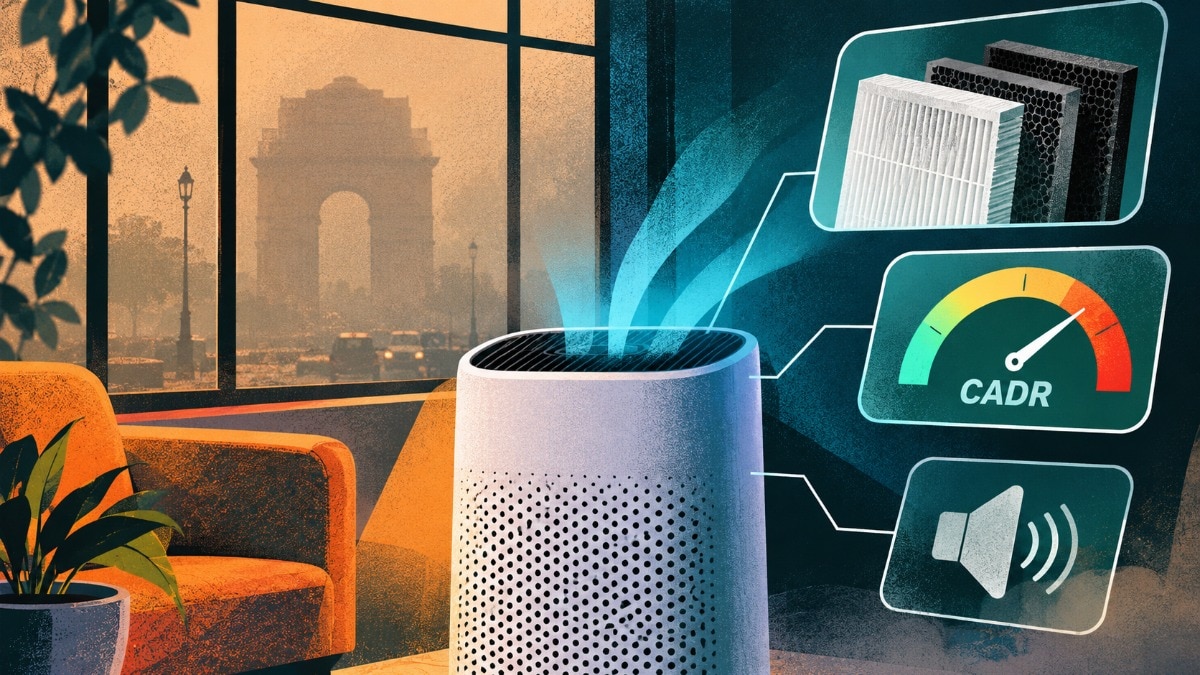
In this guide, we help you choose the right air purifier for your home.Check the HEPA filter qualityFiltration should be your first priority. Look for an air purifier with a properly specified True HEPA filter, preferably H13 or H14 grade.
These filters can capture at least 99.97 per cent of particles measuring 0.3 microns under specified testing conditions. This includes fine pollutants such as PM2.5, dust, pollen and mould spores.
Also, be careful of labels such as 'HEPA-type', 'HEPA-like' or 'washable HEPA'. These do not necessarily meet the same filtration standards, so don't rely on the label alone.Look for activated carbon filtrationA HEPA filter handles particulate pollution, but it does not remove every gaseous pollutant or unpleasant smell.
This is where an activated carbon filter helps. It can trap certain gases, volatile organic compounds (VOCs) and odours.
Ideally, a good air purifier should have multiple layers of filtration. This means a pre-filter to trap larger particles such as dust and hair, a True HEPA filter to capture fine pollutants, and an activated carbon filter to tackle smoke, fumes and unpleasant smells.
Delhi's pollution is not just about dust, which makes the carbon filter particularly important. Look for a purifier with a thick, substantial carbon layer rather than a thin sheet that offers limited filtration.Check CADR Another thing to consider is CADR, or Clean Air Delivery Rate.
It is simply a measure of how quickly an air purifier can clean the air in a room. It tells you how much filtered air the machine can deliver in an hour.
The higher the CADR, the faster it can clean the air.For a room of around 150–200 square feet, look for air purifiers with a CADR of at least 250m/h. Larger living rooms may need 400m/h or more.
If you have a large home with multiple rooms, you may need more than one purifier.Also, check how many times the purifier can clean all the air in a room every hour. This is called Air Changes Per Hour (ACH).
For Delhi's high pollution levels, aim for at least four to five air changes per hour. If you have allergies or respiratory sensitivities, look for six to eight.Check the noise levelsA purifier that is too loud to bear is a purifier that will be switched off.
Look for noise figures at different fan speeds, not just the flattering lowest one. So, check its noise levels at different fan speeds rather than just looking at the lowest figure advertised.
If you're buying one for your bedroom, look for a sleep mode that keeps noise below 30–35 decibels and dims the display lights.Count the running costsThe price on the box is only the beginning. In heavily polluted cities, filters can clog in three to six months.
So before buying, do check few things: The price and availability of genuine replacement filtersWarranty and after-sales support in your cityPower consumption, since you will run it for long hoursA filter-change indicator, so you are not guessingSmart features and non ionisersA live PM2.5 display, auto mode, timers and app control can make a purifier easier to use. However, don't let these extra features become your priority when buying an air purifier.
Filtration and room coverage should always come first.Also, be careful with models that use ionisers or ozonators. These can produce ozone, which may irritate the lungs.
If a purifier comes with an ioniser, check whether it is certified to produce zero or negligible ozone.While using the air purifier Even the best machine underperforms if it is badly set up. While the air purifier is on, keep doors and windows shut, place the purifier away from curtains, furniture and tight corners, and run it at a higher speed before bedtime and whenever the AQI spikes.
Do not wait for the air to feel bad. - Ends