


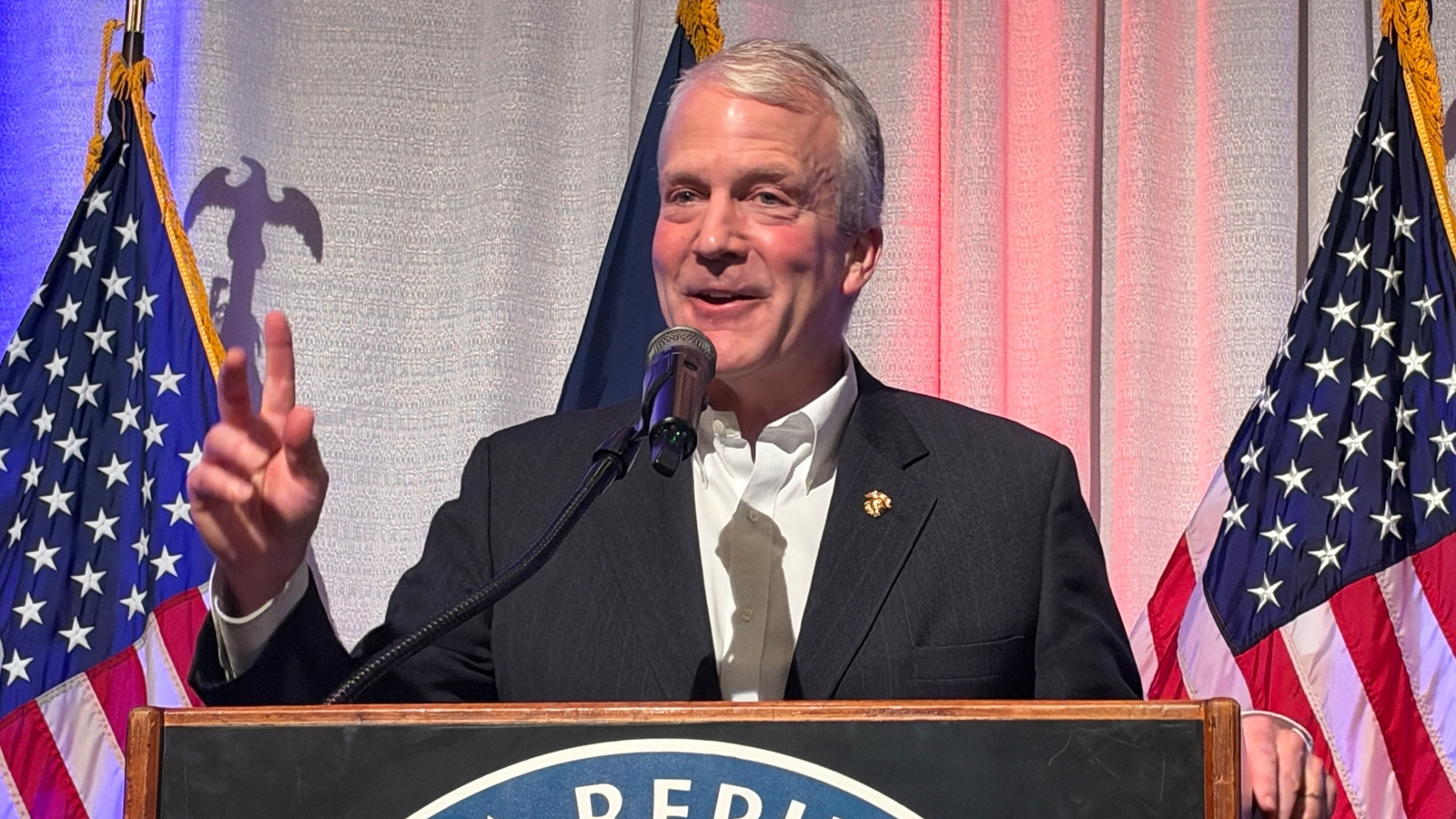
Alaska Governor Mike Dunleavy has revealed that state authorities are investigating possible misconduct linked to the controversial candidacy of a second candidate named Dan Sullivan, as the state's closely contested U.S. Senate race continues to draw scrutiny.Democrat Mary Peltola leads Senator Dan Sullivan by 2,517 votes, while Daniel J.
Sullivan Jr. has received about 3,651. (AP Photo/Mark Thiessen)Speaking on WABC radio's The Cats Roundtable on Sunday, the Republican governor said investigators were looking into potential violations, including actions that could amount to perjury."We are in the midst of investigations as to determine if there was any wrongdoing," Dunleavy said, according to Fox News, adding that authorities were examining "especially anything that might resemble perjury."The controversy involves Daniel J. Sullivan Jr., a retired teacher from Petersburg, Alaska, whose candidacy has attracted attention because of his name's similarity to that of Republican Senator Dan Sullivan.As of Monday afternoon, Democrat Mary Peltola held a lead of 2,517 votes over the incumbent senator.
Meanwhile, Daniel J. Sullivan Jr. had received approximately 3,651 votes, representing 1.7 percent of the total.
His vote count is higher than the current margin separating the two leading candidates.The retired teacher has denied having any coordination with Peltola's campaign.Investigation intensifies over alleged ‘Decoy Dan’ strategyThe state investigation began drawing greater attention following a late-October report by The New York Times, which alleged that individuals associated with Peltola's campaign and national Democratic groups had been involved in recruiting Daniel J. Sullivan Jr. to enter the Senate race.Peltola's campaign has rejected allegations that it played a role in recruiting the second Sullivan.Federal authorities have also become involved in the dispute.
The Department of Justice has launched its own inquiry and filed a lawsuit seeking to prevent the certification of a Peltola victory if votes cast for Daniel J. Sullivan Jr. could have influenced the election outcome.Also Read: Trump shares AI video of Dana White as press secretary, UFC fighters attacking reportersDunleavy suggested that state officials were already familiar with aspects of the controversy before the newspaper's report became public."When The New York Times article came out, you know, we already knew a lot of what was happening there," the governor said.However, it remains uncertain whether encouraging a candidate with a similar name to enter an election would constitute a criminal offense.
Ballot stacking is not prohibited under federal law, and the Justice Department has not publicly identified the specific criminal violations it is investigating.Michael Morley, a law professor at Florida State University, criticized the federal government's legal action, describing the department's lawsuit as "completely meritless."Ranked-choice voting adds another dimension to the disputeThe controversy has also renewed debate over Alaska's ranked-choice voting system, which Dunleavy described as “very confusing” during his radio interview.The state is preparing for another major vote on the system, with residents deciding through Ballot Measure 2 whether to repeal the voting method. The measure comes just two years after a similar statewide debate over the system.Under Alaska's election rules, a candidate must secure more than 50 percent of the vote to win outright.
Since neither Peltola nor Senator Sullivan is currently expected to reach that threshold, the Senate contest is likely to proceed to a ranked-choice tabulation scheduled for November 18.Based on the current vote totals, Daniel J. Sullivan Jr. would be eliminated first.
His supporters' ballots would then be redistributed according to the next preference marked on each ballot.How ranked-choice voting could affect the outcomeSupporters of Alaska's voting system argue that ranked-choice voting reduces the potential impact of candidates who might otherwise divide support between two similar candidates.Scott Kendall, the Anchorage attorney who authored the 2020 ballot measure establishing the system, believes the process is designed to address precisely this kind of situation.Ranked-choice voting “neutralizes the impacts of schemes and spoiler candidates,” Kendall told Newsweek.He also explained that voters who might initially confuse the two candidates could rank both of them on their ballots, allowing their preferences to be accounted for during subsequent rounds of counting.With the Senate race still unsettled, the controversy surrounding the two Dan Sullivans has become a significant issue in Alaska's election aftermath.