


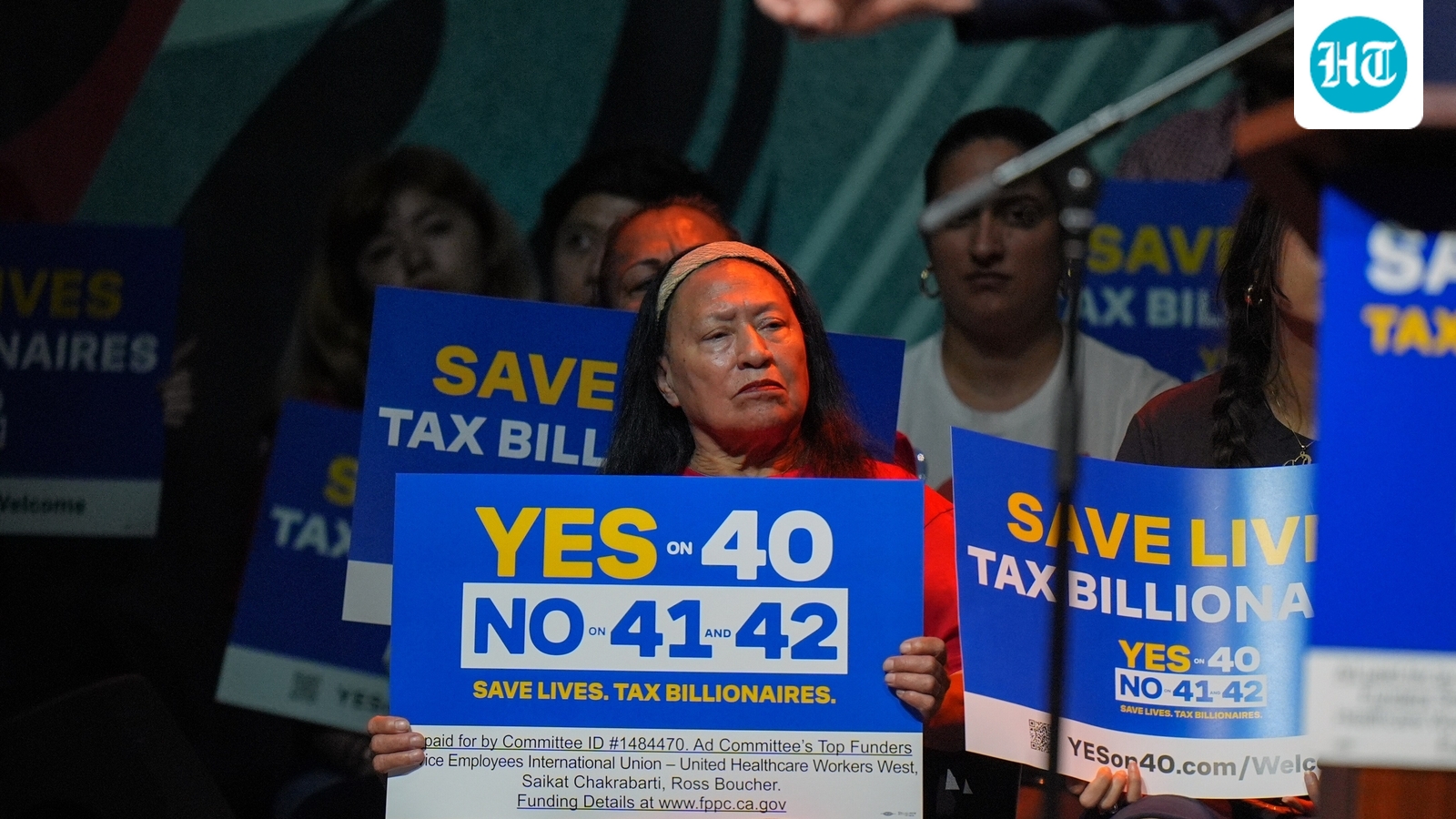
LOS ANGELES—California voters rejected a proposed billionaire tax, ending a heated and expensive fight over what could have been the nation’s first modern tax on wealth.Supporters listen to Sen. Bernie Sanders, I-Vt., during a campaign rally in support of California Proposition 40, known as the billionaire tax, in Los Angeles, Monday, Oct.
5, 2026. (AP Photo/Jae C. Hong) (AP Photo/Jae C.
Hong)The Associated Press called the race Monday as the ballot initiative, Proposition 40, was trailing after last week’s election.The outcome is a significant blow to supporters who had hoped to create a template for taxing wealth that could extend far beyond California. It also leaves the state’s next governor, Democrat Xavier Becerra, with a major budget problem.Proposed by a healthcare-workers’ union, the initiative sought to impose a one-time, 5% tax on the net assets of California residents worth more than $1 billion at the end of this year.
The union had estimated the tax would raise $100 billion over five years to offset looming Medicaid cuts that President Trump signed into law last year.The California proposal was without modern precedent in the U.S., where most individual taxes are assessed on income rather than on assets. Advocates for taxing wealth say the existing system allows superrich Americans to pay relatively little to the government.But success was never a sure thing, even in deep-blue California.
Opponents of the tax, including Google co-founder Sergey Brin and other tech executives and billionaires, poured hundreds of millions of dollars into campaigns to defeat it. They outraised proponents more than 10-to-1.Some of that funding went toward two ballot measures aimed at undermining the billionaire tax: one aimed at adding new spending rules and audit requirements, the other on banning wealth taxes.Prop.
40 was a “reckless experiment conducted on our state’s economy with little regard for the harms it would cause,” the antitax campaign said. The campaign said California is facing “enormous pressure” because of the looming healthcare cuts, and wants to work with Becerra and others on “more thoughtful” solutions.The loss is a stinging defeat for the Service Employees International Union-United Healthcare Workers West, which spent more than $30 million to try to pass the tax.Dave Regan, the union’s president, vowed to put a billionaire tax back on the ballot in 2028 if lawmakers in Sacramento don’t come up with a solution to the healthcare cuts by then.“That is our plan,” Regan said. “We will build on the coalition that brought us here, we welcome more stakeholders to the process, and we’ll put forward a proposal informed by everything that we’ve learned in this campaign.”At a time of infighting among Democrats over the party’s future, the failed billionaire tax underscored a key divide over the party’s economic message.
The party flipped the U.S. House of Representatives and the U.S.
Senate by hammering cost-of-living concerns, including high fuel and grocery prices—but progressives and moderates have differing views about how those issues should be addressed.The tax proposal roiled California’s political and labor circles for the past year. Though the state Democratic Party endorsed the wealth tax in August, party leaders—including departing Gov.
Gavin Newsom and his elected successor, Becerra—opposed it.Newsom warned the tax could undermine California’s economic competitiveness and marshaled a coalition of Democratic-aligned groups to oppose it. Among those that did: Planned Parenthood Affiliates of California, groups representing health clinics and doctors, the state’s largest teachers union, and unions representing firefighters and construction workers.Polls earlier this year consistently showed the tax plan had modest support, with stronger backing from Democrats.
But public opinion soured as billionaires and their allies flooded television airwaves, cellphones, social-media feeds and mailboxes with ads portraying the tax as a threat to ordinary Californians’ retirement savings.Write to Paul Kiernan at paul.kiernan@wsj.com and Laura J. Nelson at laura.nelson@wsj.com