


IT WAS NOT the first time Donald Trump announced a “big, beautiful agreement” to end a war. In the case of Russia’s invasion of Ukraine, he has made similar announcements at least three times.
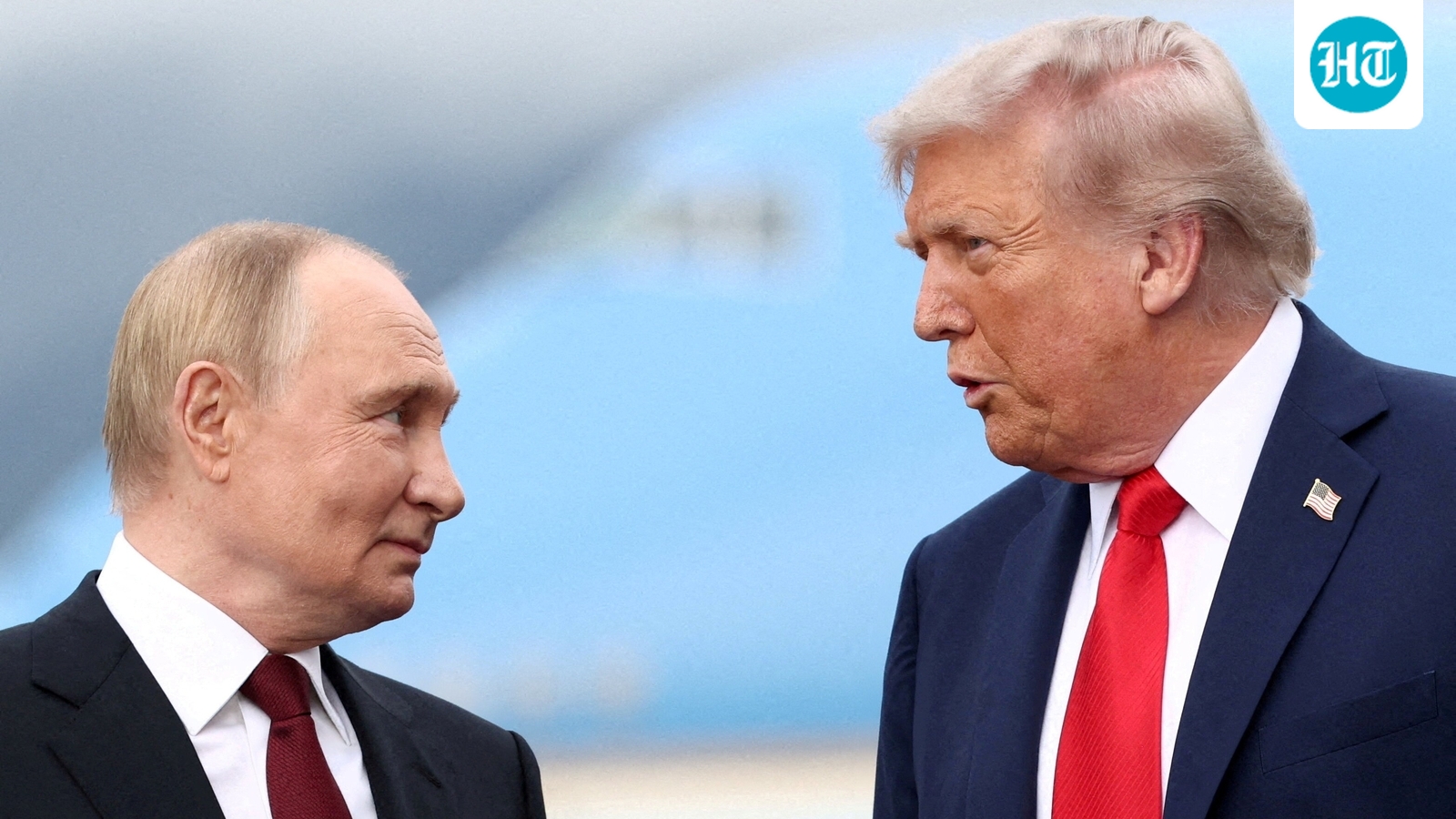
But his most recent remarks, delivered just days before the start of the first trilateral talks between Russia, Ukraine and America since February, have set alarm bells ringing in Kyiv and in parts of Europe. The negotiations are due to begin on November 10th in Abu Dhabi.FILE US President Donald Trump speaks with Russian President Vladimir Putin, as they meet to negotiate for an end to the war in Ukraine, at Joint Base Elmendorf-Richardson in Anchorage, Alaska, US, August 15, 2025. (REUTERS/Kevin Lamarque//File Photo)Few believe a window for serious diplomacy has opened.
But insiders in America and Ukraine report that President Trump’s heavy defeat in the midterm elections has injected a new urgency into the process. The arrival of Democratic majorities in the two houses of Congress in January offers a firm deadline to his main negotiators, Steve Witkoff and Jared Kushner, who could soon face investigations over alleged conflicts of interest.
Ukrainian negotiators are privately sceptical of a breakthrough, but have been instructed to approach the talks with an open mind, if only to avoid annoying Mr Trump.People familiar with the talks, which will be held over two days, note that Russia is signalling unusual flexibility, even on the matter of ending the fighting on the current front lines. But this flexibility appeared only after American negotiators offered to broaden the talks to include a wider discussion about European security.
That, argue critics, opened the door to Russia making new demands that can never be met, allowing it to continue the war while pretending to talk about peace. American officials insist the proposals have the backing of European partners and NATO.Ukraine does not believe Vladimir Putin is ready to sign a comprehensive peace deal before the end of Russia’s winter campaign. “Maybe it is their Plan B, while they execute their Plan A,” says a senior Ukrainian official.
One realistic outcome of the talks, however, is a series of staggered and limited prisoner exchanges and localised ceasefires in less strategically important parts of the front line, such as the Kherson and Sumy regions. The model here would be the recent ceasefire under which residents of the Ukrainian town of Oleshky in the Kherson region were evacuated.
That deal was brokered with the help of Melania Trump, America’s First Lady. “The Russians appear to want to support Melania’s efforts,” says another Ukrainian official. “It’s helpful for their relationship with Mr Trump.”The Americans have already offered several controversial sweeteners to coax Mr Putin into a deal. One is to plug Russia back into European energy markets—in contravention of a new European Union law.
Both Ukraine and its European partners are resisting this proposal. “Not a chance of us agreeing to that while the war is still raging,” says a Ukrainian official. Another idea, according to people involved in the talks, is a cartographic fudge: to redraw Ukraine’s administrative boundaries to allow Russia to claim full control of the Luhansk and Donetsk regions it wants to conquer without Ukraine surrendering the remaining cities it holds.As before, the most difficult issue is security guarantees, without which Ukraine says it cannot stop fighting.
For now, there is no obvious compromise that would allow Russia to declare victory, while allowing Ukraine to retain full sovereignty, even over what remains of its territory. America’s negotiators say Mr Putin could accept a NATO-style Article 4 or Article 5 from America, meaning a promise to consult if Ukraine is threatened, or defend it if it is attacked.
But Ukrainians doubt they could trust that Mr Trump would honour any such guarantees. Russia, for its part, shows no indication it would accept a multinational reassurance force inside Ukraine.
Nor has it dropped its demands that Ukraine must declare its neutrality and reduce the size of its army.Ukrainian and European officials say they fear that America’s offer to include talks about Europe’s own security arrangements will give Russia new levers to pull to delay agreeing to a ceasefire. They argue that a ceasefire should come before any conversation about Europe’s future security.
But the Americans disagree, and seem to take a position close to the one Mr Putin has held since the eve of his invasion in 2022: that the war in Ukraine cannot end without discussion of Europe’s future security arrangements. A source close to the White House says the model for this new architecture could be a reworked NATO-Russia Council.
It was not wrong to try to imagine “what comes after”, the source added: “Nobody has been able to solve this conflict while everyone is telling the US how [to do so].” In a briefing ahead of the talks, an American official said any new arrangement would respect national sovereignty, with NATO “remaining central to European collective defence”. All the same, it is hard to see how simply reforming a NATO council could satisfy Mr Putin and his well-publicised desire to see Russia dominating eastern Europe in the way that the Soviet Union once did.Money is another point of contention.
Ukraine’s position is that it will require massive security and financial assistance, for at least ten years, if it is to risk demobilisation and Russia’s reintegration into the world economy. There would need to be funds to cover war damage, support veterans and their families, and to retain a credible army of at least 800,000 men.
The Americans believe that is too expensive for its supporters, and argue their security guarantees should suffice. It is also unclear whether the Europeans would be happy to underwrite that level of spending on Ukraine’s army after the war.
The frosty relationship between Mr Trump and Mr Zelensky is unlikely to bring a solution closer.For all the new diplomatic energy, the assumption in Ukraine remains that things will get worse before they get better. The country enters the winter with its infrastructure in the worst shape since the war began.
It has all but run out of Patriot missiles, which are used to knock ballistic missiles out of the sky. A deal with America to supply more has not resulted in new deliveries.
Russia, meanwhile, still has a stockpile of some 700 such missiles, is producing another 110 a month, and is midway through a campaign to make Ukrainian cities, chiefly Kyiv, uninhabitable. It is destroying bridges, water systems and power grids.
Reserves and spare parts are running low. It would be odd for Mr Putin to stop now. “Our American friends want a breakthrough,” the senior Ukrainian official says. “But seeing what the Russians are doing with our infrastructure, it’s hard to believe one is coming.”