


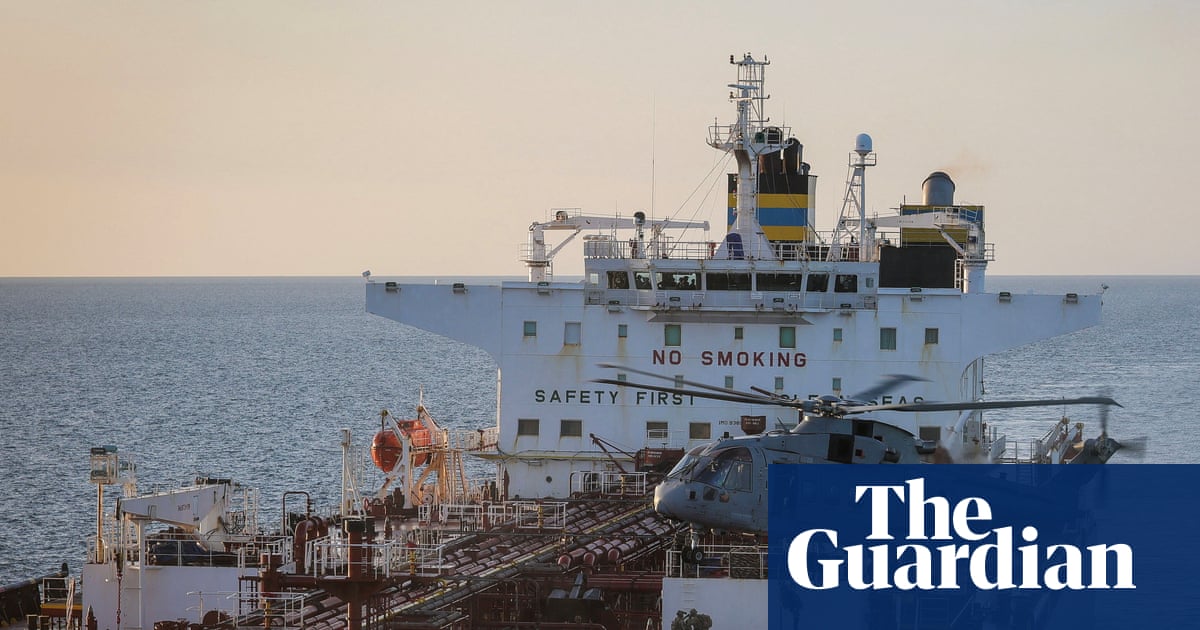
Russian naval activity around the UK has increased by 41% in the first nine months of the year, a British defence minister said, as the Royal Navy announced plans to step up a 10-country maritime defensive effort in response.Luke Pollard, minister for defence readiness, described the figure as “a huge increase”, justifying a new drone and warship initiative from “the alliance of beer-drinking nations” – the UK, the Netherlands and the Baltic and Nordic countries.The plan is for sea drones from the UK and other countries to be able to work interchangeably with warships from countries across the Northern Navies Initiative at a time when the number of British frigates is falling.“The model that we want is where British autonomy [drones] can be teamed with a British warship or a Danish warship or a Norwegian warship and can hand that autonomy off to an allied nation’s warship,” Pollard said.A future Royal Navy would combine warships and drones “because that would increase our lethality”, Pollard said, sidestepping a debate about the number of UK frigates – which could drop from 12 in 2021 to three by 2030.Last month, the cross-party defence select committee warned that the navy risked failing to deter Russian aggression in the seas around the UK because of shortfalls in the number and availability of warships and submarines.Pollard blamed the Conservatives for capacity shortfalls, accusing them of cutting budgets and delaying investment when they were in government. “Now, because of the decisions taken 10, 15 years ago, we have fewer ships and fewer submarines than I would like available,” the minister said.An extra £10bn a year allocated to defence in 2030 by chancellor John Healey in October’s budget means that the UK could “send a clear demand signal to industry”, the minister said, to help tackle the Russian threat.However, since the budget announcement, there have been no major defence spending announcements, with the UK sticking to the defence investment plan which was announced in June and fully funded in the budget. That included a £1.5bn investment in sea drones over four years.Russian spy ships, such as the Yantar, have been sailing near UK waters this year trying to obtain “an increased picture of our critical national infrastructure”, Pollard said, as well as “mapping our undersea cables”.Its frigates have also been active in the North Sea and the Channel throughout 2026, often escorting oil tankers and other trade vessels, and at one point firing shots near a pleasure yacht south of the Isle of Wight in June.Oil tankers linked to Russia remained active, though were now often “sailing around the UK” to avoid coming through the Channel, Pollard said, after the seizure of one Russia-linked tanker, the Smyrtos, in the same month as the shooting incident.The minister insisted that, if necessary, the Royal Navy was “ready to fight tonight”, even though it took three weeks for the UK to send a destroyer to Cyprus in the spring after the UK base at Akrotiri was struck by a drone fired by an Iranian proxy.Russia’s northern fleet, based in the Barents Sea, retains “a really formidable undersea presence”, Pollard said, adding that Moscow had continued to invest in it throughout the Ukraine war as a means of threatening the UK.The minister was speaking at the navy’s International Sea Power conference held on the Prince of Wales aircraft carrier in Oslo.
Sailing the warship to Norway was “a really important deterrent signal that we stand ready to defend every single inch of Nato territory”, he said.A further £90m will be spent on underwater drones and sensors to monitor the Greenland-Iceland-UK gap for Russian submarine activity, considered to be a strategic choke point in what the navy describes as the “high north”.Ukraine has used cheap sea drones to destroy around a third of Russia’s Black Sea fleet, forcing it to relocate from Sevastopol in occupied Crimea to Novorossiysk, on the eastern Black Sea.The former head of the country’s military, Valerii Zaluzhnyi, now Ukraine’s ambassador to the UK, said the increasingly complex use of sea drones meant that “it is likely that the world’s navies are on the verge of the most radical transformation since the rise of torpedo technology”.