


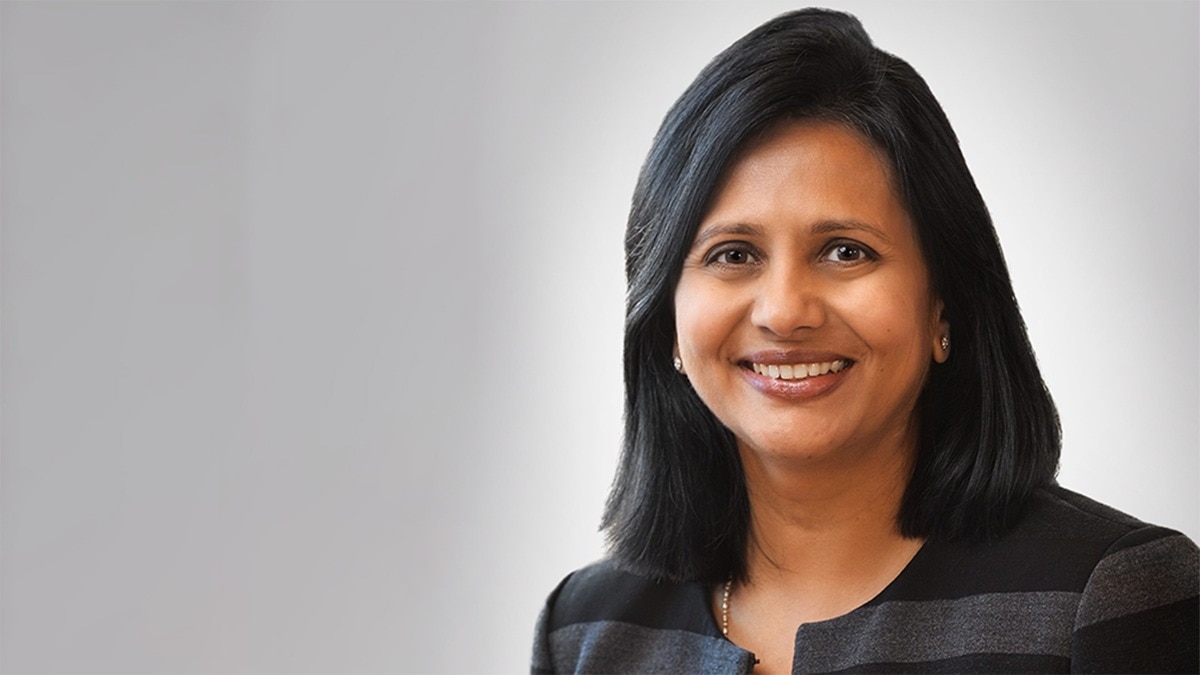
As questions mount over Jensen Huang's future at Nvidia, attention is turning to the company's board of directors and the people who will have a say in its next leadership decision. One name that is drawing attention is Aarti Shah, an Indian-origin business executive who has been part of Nvidia's board since 2020.
Shah will be among the directors deciding whether Huang continues as the company's CEO or whether Nvidia needs to consider a change at the top. The development follows reports about Huang's alleged extramarital relationships, which have brought unwanted attention to the chipmaker's leadership.The New York Times reported that Huang had two extramarital affairs.
One reportedly involved Kimberly Powell, an Nvidia executive who joined the company in 2008 and heads its healthcare business. US officials are also reportedly examining whether the other woman had links to Chinese intelligence.Nvidia has said that Huang acknowledged being unfaithful to his wife and apologised to his family and employees.
Reuters has reported that the company's board is preparing to discuss his future. The directors are also reportedly considering the possibility of appointing an interim CEO while searching for a permanent successor, with the help of an external recruitment firm.How an Indian became a board member of NvidiaShah's professional journey began with an academic background in statistics and mathematics.
She completed her bachelor's and master's degrees in these subjects in India before moving to the US for further studies. She subsequently earned a PhD in Applied Statistics from the University of California, Riverside.
She spent 27 years at pharmaceutical major Eli Lilly, where she held several positions across research, statistics, technology and business management. Her career there included roles such as Senior Statistician, Research Scientist and Vice President for Biometrics.
She also worked as Global Brand Development Leader in the company's Bio-Medicines business unit.By the time she left Lilly in 2021, Shah had risen to the position of Senior Vice President and Chief Information and Digital Officer. Her experience has since taken her to the boards of several major organisations.
Apart from Nvidia, she joined the board of Swiss pharmaceutical company Sandoz Group AG in 2023. She serves on its science, innovation and development committee, as well as its human capital and ESG committee.
Shah has also been a trustee of financial services company Northwestern Mutual since 2020, where she is part of its audit and distribution and technology committees. Her work extends to the non-profit sector as well.
She serves on the boards of St. Jude Children's Research Hospital and its fundraising organisation, American Lebanese Syrian Associated Charities (ALSAC).
She is also the secretary and a trustee of Shrimad Rajchandra Mission Dharampur USA.Earlier, Shah completed a nine-year term on the Indianapolis Public Library Foundation's board and spent four years with the Centre for Interfaith Cooperation.Nvidia faces a difficult leadership decisionShah's experience in technology, data and business management could be particularly relevant as Nvidia's board evaluates its options. However, replacing Huang would be a big challenge for the company, given how closely its growth has been tied to his leadership.Huang co-founded Nvidia more than three decades ago and helped turn it from a graphics chipmaker catering largely to the gaming industry into a major player in artificial intelligence.
The company is now valued at approximately $4.5 trillion.His contribution has not been limited to running the business. Huang has played a central role in identifying technologies worth investing in and turning the work of Nvidia's engineers into products that can be sold commercially.
He has also overseen major business decisions involving engineering, investments and supply chains. This makes the search for a successor complicated.
Nvidia would need someone capable of understanding its technology, managing its business operations and maintaining its position in the rapidly growing AI market.- Ends