


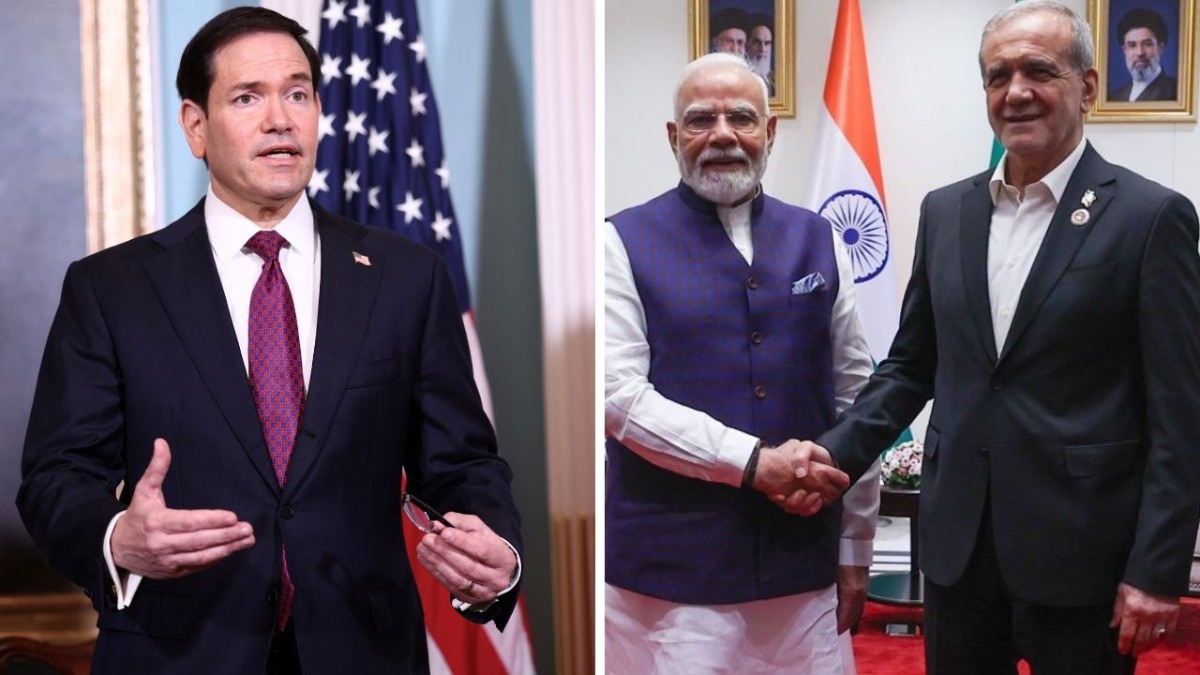
Following a meeting between Prime Minister Narendra Modi and Iranian President Masoud Pezeshkian, US Secretary of State Marco Rubio has cautioned India and other nations against assisting Iran in generating income or circumventing American penalties. He shared these views during a discussion on The Brian Kilmeade Show with host Brian Kilmeade, responding to an inquiry concerning the Prime Minister's encounter with Pezeshkian and whether New Delhi intended to forge a novel commercial agreement with Tehran.
While noting that nations possess the autonomy to formulate their individual foreign policies and preserve ties with Tehran, Rubio stated that a formal trade pact between India and Iran did not appear to exist.
This development unfolds as the Trump administration intensifies its financial pressure campaign against Iran, cautioning governments and enterprises that persist in commercial engagements with Tehran about the prospect of secondary penalties. On August 24, US Treasury Secretary Scott Bessent initiated an effort designated as Operation Economic Outcast, characterizing the undertaking as an economic D-Day designed to sever Iran's remaining financial lifelines.
Rubio indicated that Washington understands that governments globally maintain communication with Iran, highlighting that the United States itself had interacted with Iranian representatives during prior talks. He noted that meetings with factions of the Iranian government had occurred alongside existing channels of contact. Nevertheless, he established a distinct boundary regarding commercial actions that Washington contends could assist Tehran in evading restrictions.
Rubio emphasized that the President's stance remains unambiguous, asserting that no nation ought to aid Iran in bypassing sanctions or establishing frameworks to produce revenue intended for funding terrorism and pursuing nuclear weapons development. He added that if governments choose to proceed with such actions, the United States will be compelled to apply penalties against them as well.
Rubio's comments arrived on the heels of the Prime Minister's discussion with Pezeshkian during the Shanghai Cooperation Organisation summit hosted in Bishkek. Both leaders reviewed bilateral ties, encompassing strategies to broaden and vary commercial exchange, while also sharing perspectives regarding the conflict in West Asia alongside the security of merchant vessels and maritime crews.
In a digital platform statement, the Prime Minister noted his meeting with President Masoud Pezeshkian in Bishkek, reaffirming a dedication to reinforcing the enduring partnership between India and Iran across multiple domains. He expressed intentions to expand and diversify the trade portfolio in the future, mentioning discussions on the regional climate and reiterating that India will maintain support for initiatives directed at securing enduring peace.
According to the Ministry of External Affairs, the Prime Minister additionally voiced apprehension over escalating regional hostilities and reaffirmed India's persistent stance that disagreements ought to be resolved through conversation and diplomatic engagement.
Commercial vessel security also occupied a central place in the dialogues as ongoing hostilities in West Asia continually impact maritime movement. The ministry reported that the Prime Minister stressed the necessity of safeguarding navigation and trade freedoms, demanding that civilian populations, civilian facilities, and merchant vessels remain unaffected by hostilities.
Emphasizing that navigation and commerce freedoms must be protected under all conditions, the ministry noted the warning that civilians and civilian infrastructure, including merchant vessels and crews, must face no harm. This matter holds particular significance for India, which maintains substantial commercial and maritime stakes in the area and has repeatedly urged authorities to secure the welfare of seafarers amid mounting hostilities.
Conversely, an Iranian statement regarding the encounter indicated that Pezeshkian expressed gratitude for India's backing and collaboration while encouraging New Delhi to leverage its diplomatic standing to assist in mitigating West Asian tensions.
Pezeshkian stated that his administration's focus from its inception centered on guaranteeing peace and security alongside resolving matters through dialogue and negotiations. He criticized Washington's strategy toward Tehran, contending that the United States selected confrontation over diplomatic resolution, and asserted that Americans unfortunately pursued conflict, insecurity, and the enforcement of authority through might instead of utilizing diplomatic channels.
Pezeshkian asserted that Iran held no desire for conflict, explaining that Tehran's primary objective involved safeguarding its population while fostering an environment conducive to peace and stability. While the Islamic Republic maintained dedication to responsibilities assumed under agreement structures, he stated that the American side regrettably failed to honor its obligations.
Tehran has dismissed the most recent American penalty initiative, with the Iranian Foreign Ministry lodging accusations against the United States.