


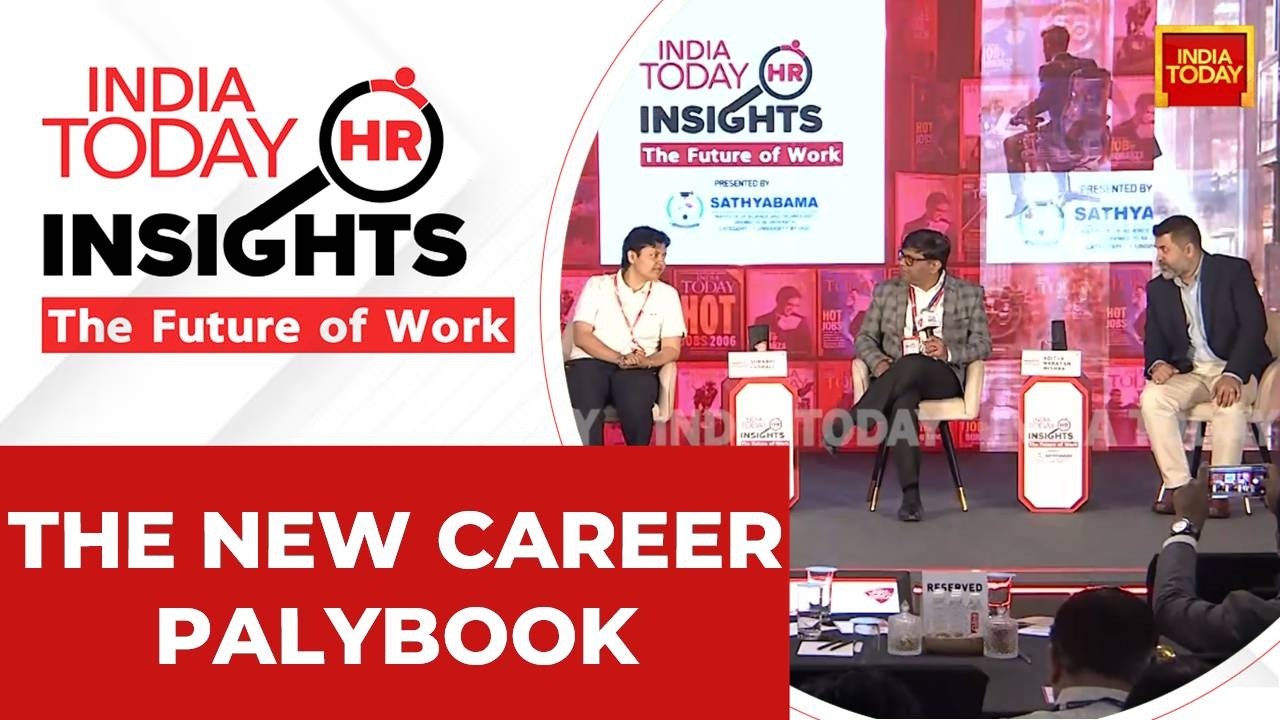
UPDATED: Nov 2, 2026 16:25 ISTIndustry leaders across sectors, including fast-moving consumer goods and electric vehicle manufacturing, examine changing workforce dynamics, hiring strategies, and evolving career pathways. The panel outlines the structural transition from linear corporate ladders to non-linear growth models, highlighting inter-industry mobility, career breaks, and continuous skilling.
To strengthen talent retention and engagement, human resources leaders examine internal mechanisms such as horizontal mobility, career swim lanes, and cross-functional roles. The discussion details organizational redesigns driven by artificial intelligence and automation, enabling talent to focus on complex problem-solving.
Furthermore, the participants explore multigenerational workforce integration through reverse mentoring and collaborative teams, contrasting technological literacy with veteran industry foresight. Addressing operational constraints in manufacturing environments, speakers advocate for intellectual humility and input-driven flexibility.
Emphasizing variations in employee expectations around organizational culture and purpose across socioeconomic segments, the panelists identify workplace transparency and honest employee value propositions as primary factors in preventing early turnover. Read MoreVIDEOS FROM OTHER SECTIONSLATEST VIDEOSSC Permits Green Crackers In Delhi-NCR For Diwali, Sets Timings And QR Code RuleAhead of Diwali, the Supreme Court has permitted the bursting of certified green crackers in the Delhi-NCR region on 7 November and 8 November.
Addressing rising air pollution concerns, the apex court stipulated that only green crackers carrying verifiable QR codes will be permitted, issuing a clear warning against fake variants. Bursting of firecrackers has been restricted to designated time slots: 6:00 am to 7:00 am in the morning and 8:00 pm to 10:00 pm in the evening across Choti Diwali and Badi Diwali.
Pollution regulatory bodies will actively monitor air quality across the capital during the festive period.Three Rebel AAP MLAs Join BJP in Punjab; Ruling Party Downplays Exit as No SetbackThree rebel Aam Aadmi Party legislators in Punjab have resigned and joined the Bharatiya Janata Party. The legislators include Harmeet Singh Pathanmajra, Chetan Singh Jouramajra, and Kunwar Vijay Pratap Singh, who resigned from the Amritsar North constituency.
Responding to the crossover, Punjab Cabinet Minister Barinder Kumar Goyal stated that the party had given due respect to the legislators and maintained that their departure was not a setback, remarking that people come and go in political organisations. Simultaneously, Punjab Chief Minister Bhagwant Mann addressed a public gathering in Patiala, hitting out at both the BJP and the Congress.
Mann alleged that the BJP serves as an extension of the Congress, citing prominent former Congress leaders who had previously switched over to the saffron party. Mann further stated that those switching parties were betraying Punjab, observing that while the opposition parties appear to be at odds publicly, they often share personal ties.'AI Transformation Is More Of A Human Transformation': Infosys CHRO Shaji MathewInfosys Chief Human Resources Officer Shaji Mathew spoke on the evolving dynamics of artificial intelligence and workforce transformation across the IT sector.
Reflecting on his career journey from starting at Infosys when it had approximately 300 employees to overseeing a global workforce of over 300,000, he emphasized that AI transformation is fundamentally a human transformation rather than merely a technological one. He pointed out that while AI can automate repetitive tasks, generate code, and provide multiple solutions, human capabilities such as problem-finding, contextual judgement, leadership, and empathy remain indispensable.
Mathew highlighted that skills making humans truly human will command a premium in future workplaces operating under a human-plus-AI paradigm. Addressing skilling and hiring, he confirmed that Infosys recruited 20,000 freshers last year and targets another 20,000 recruits, while rearchitecting learning via structured multi-tier programs for employees.
He also discussed enterprise adaptability, hybrid working policies, and the essential role of maintaining organisational culture.HR in Age of AI: Hybrid Management, Bridging Skill Gaps & Critical ThinkingA panel of industry leaders examines the evolving role of people managers and human resources in the era of artificial intelligence. Francis Padamadan notes that managers must adapt to a hybrid environment combining human-in-the-loop and AI-in-the-loop, urging a willingness to unlearn and learn alongside continuous upskilling.
Ayaskant Sarangi emphasizes setting context, managing workplace insecurities, and reimagining governance as AI reshapes organizational dynamics, noting client demands are transitioning from billable effort to real business outcomes. Ruchir Jingran outlines how AI necessitates critical thinking, leadership, and coaching, highlighting ITC Foods' focus on growth mindset, futuristic orientation, and hiring partnerships with regional industrial training institutes to expand manufacturing opportunities, particularly for women.
The discussion underscores that rather than eliminating jobs, technological evolution creates an urgent need to bridge employability gaps through soft skills, adaptability, and continuous learning.