


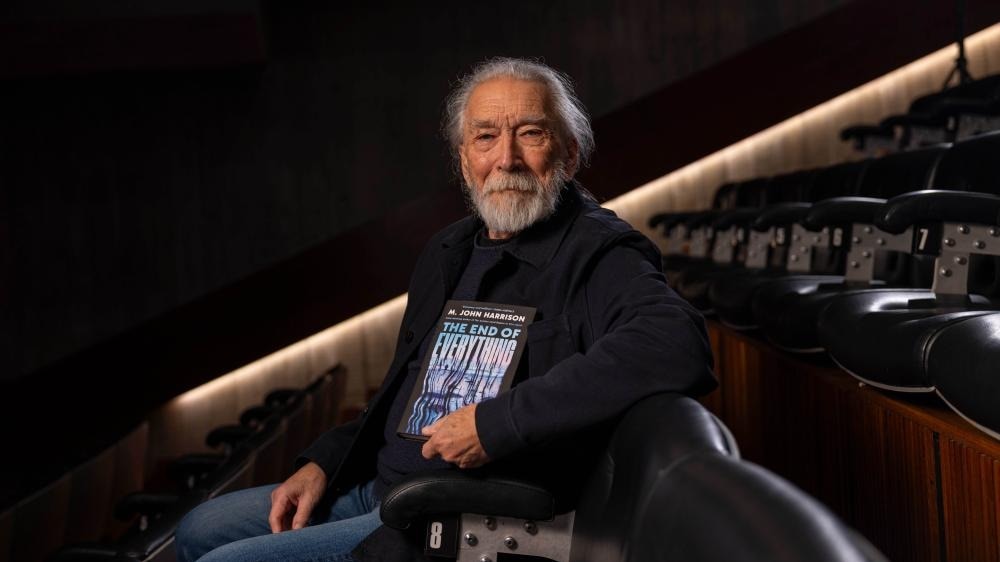
British author M John Harrison has won the 2026 Booker Prize at 81 for The End of Everything. The record-breaking victory marks the Booker's first honour for an established science-fiction writer.
His science-fiction novel imagines a world after catastrophe, where society has collapsed, but people are still trying to carry on with everyday life.British author M John Harrison has won the 2026 Booker Prize at 81 for The End of Everything. At 81, British author M John Harrison has achieved something no writer has done before: become the oldest person to win the Booker Prize.He has won the 2026 award for The End of Everything, a dystopian novel that takes readers to a version of Britain where society has fallen apart, familiar rules no longer apply and even the nature of the disaster remains unclear.The win is particularly significant for science fiction.
Harrison, who has spent six decades writing across genres, is the first author to emerge from the established science-fiction community to win the prestigious literary award. This was also his first Booker Prize nomination.A WORLD WHERE NOTHING MAKES SENSESet on the south coast of England, The End of Everything follows Phillip Tennent, a beachcomber who makes a living collecting objects washed ashore from the English Channel.
Years after a mysterious catastrophe, the world he knows has changed beyond recognition. Governments barely function, new creatures fill the seas, and even Europe seems to have disappeared from the map.Phillip lives with his elderly aunt Marnie.
Their already uncertain existence takes another turn when he discovers a strange object in the water. The creature keeps changing, and Phillip must take it inland before it threatens everything he thinks he understands.
The 198-page novel combines dystopian fiction, satire and elements of mystery. Despite its unsettling setting, it also finds moments of humour in the way people attempt to continue their everyday lives.THE REAL WORLD BEHIND THE FICTIONWhat makes the novel particularly interesting is how closely its imagined disaster connects with real-world anxieties.Harrison has said that the UK's East Coast art towns provided the setting, while current affairs shaped the book's themes and satire.
In an interview with the Booker Prize Foundation, he explained that he wanted to explore what happens when people's explanations and expectations of the world repeatedly fail, yet they still have to find a way to live.He also identified the 2008 financial crisis as an early inspiration, telling BBC Radio 4's Front Row that he wanted to write about society's failure to explain what was happening around it.SIX DECADES OF WRITING, ONE BOOKER WINHarrison has never been easy to place in a single literary category. A genre-defying writer, he has moved between science fiction, fantasy and literary fiction, while also building a reputation as a literary critic.His work has attracted admiration from writers including Olivia Laing, Robert Macfarlane and Neil Gaiman, who have praised his writing style.Over the years, he has written 13 novels and five short story collections, along with an 'anti-memoir'.
His novels include Climbers, which won the Boardman Tasker Prize for Mountain Literature in 1989, Nova Swing, which received the Arthur C Clarke Award in 2007, and The Sunken Land Begins to Rise Again, which won the 2020 Goldsmiths Prize for innovation in fiction.Harrison sold his first story in 1965 and joined the British speculative fiction magazine New Worlds in 1969, where he edited its books pages until 1978.The 2026 judging panel, chaired by Mary Beard, unanimously selected his novel from six shortlisted books after considering 163 submissions.Harrison also served as a judge for the 2022 Booker Prize. At 81, he has now moved from judging one of literature's biggest awards to becoming its oldest-ever winner.- Ends