


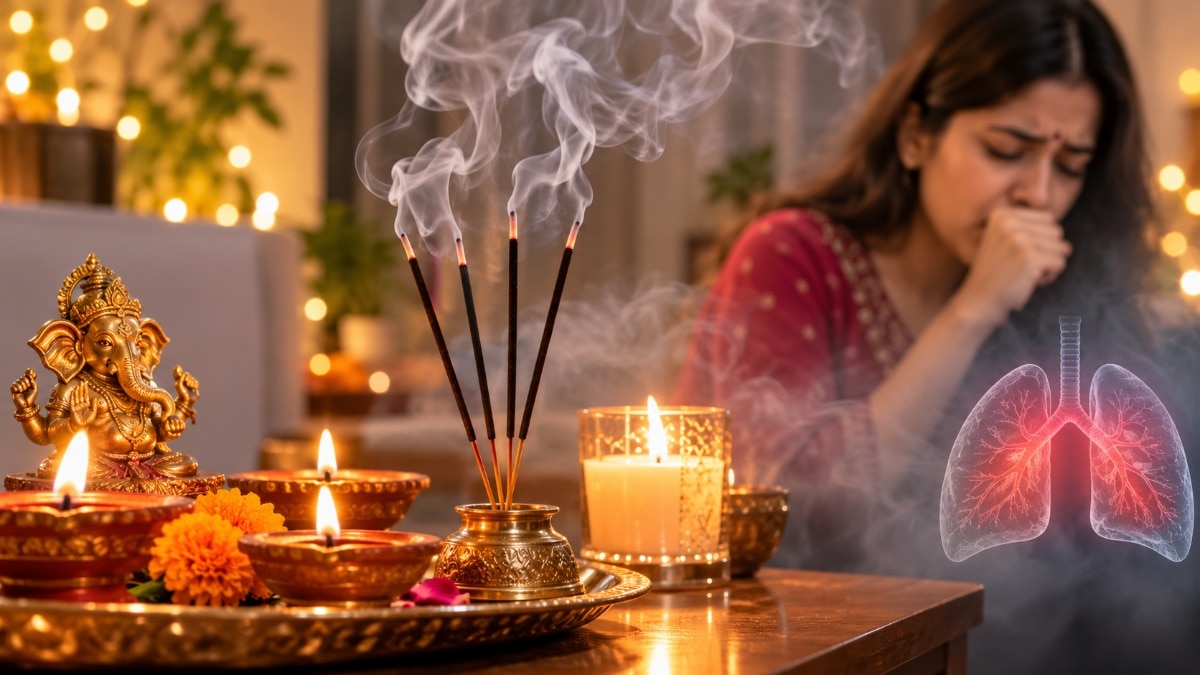
While firecracker smoke often dominates conversations around Diwali pollution, indoor activities such as burning incense sticks, camphor, dhoop and scented candles can also release fine particles and pollutants. Doctors explain how to reduce exposure and keep indoor air healthier during the festive season.Diwali celebrations often involve lighting diyas, burning incense sticks, using camphor and decorating homes with scented candles.
While these practices are an integral part of the festivities, they can also contribute to indoor air pollution, particularly in homes with inadequate ventilation. Even oil- and ghee-lit diyas release some combustion particles while burning, adding to the pollutants present in indoor air.As attention largely remains on outdoor air quality and the pollution caused by firecrackers, the impact of everyday festive activities inside homes is often overlooked.
However, burning materials such as incense sticks, dhoop, camphor and candles can release smoke, fine particulate matter and gases into the surrounding air. Similarly, the combustion involved in lighting diyas can also release particulate matter.
When rooms remain poorly ventilated, these pollutants can accumulate indoors and affect respiratory health.Dr Rajesh Kumar, Director, Internal Medicine, Paras Health, Gurugram, explains that indoor pollution during Diwali can cause irritation in the eyes, nose and throat, while also making breathing difficult for people with asthma and allergies. "Even burning incense sticks, camphor, dhoop and scented candles can cause indoor pollution since they lead to the emission of smoke and fine particles," he says.Prolonged exposure to these pollutants, particularly in enclosed spaces, can aggravate existing respiratory conditions and cause discomfort. Children, elderly people and individuals with pre-existing respiratory ailments may be particularly vulnerable.HOW DIWALI RITUALS CAN CONTRIBUTE TO INDOOR POLLUTION Lighting diyas and burning incense are common festive practices, but the smoke produced by different burning materials can affect the air inside homes.Dr Prabhat Kumar, Senior Consultant, Internal Medicine, Kailash Hospital and Neuro Institute, explains that burning incense sticks, dhoop, candles and other decorative materials can release fine particulate matter and gases that irritate the airways."Inhaling the same over prolonged periods will cause coughs, throat irritation, sneezes, breathlessness, and discomfort, especially in kids, elders, and those suffering from respiratory ailments," he says.The risk can increase when several smoke-producing materials are used simultaneously in small rooms without adequate ventilation.
Instead of dispersing, the pollutants can remain suspended in the indoor environment, increasing the likelihood of exposure.WHAT ARE THE SIGNS OF INDOOR AIR POLLUTION EXPOSURE?Exposure to smoke and fine particles can trigger several respiratory and irritation-related symptoms. These may include:Eye, nose and throat irritation: Smoke and airborne particles can cause discomfort, burning sensations and irritation.Persistent coughing: Inhaling pollutants can irritate the respiratory tract and trigger coughing.Sneezing and wheezing: People with allergies or asthma may experience worsening symptoms.Breathlessness: Individuals with existing respiratory conditions may find it difficult to breathe comfortably.Chest discomfort: Prolonged exposure to indoor smoke can cause respiratory discomfort that should not be ignored.Both doctors advise seeking medical attention if symptoms such as persistent coughing, wheezing, chest discomfort or breathing difficulties develop.HOW TO REDUCE INDOOR POLLUTION DURING DIWALIWhile completely avoiding festive rituals may not always be practical, a few precautions can help limit exposure to indoor pollutants.Limit the use of incense sticks and dhoop: Avoid burning multiple incense sticks, camphor or dhoop simultaneously, particularly in small, enclosed rooms.Ensure adequate ventilation: Keep rooms sufficiently ventilated whenever outdoor air quality permits.
However, when outdoor pollution levels are high, keep windows and doors closed during peak pollution hours.Consider HEPA-filtered air purifiers: Air purifiers equipped with HEPA filters can help reduce airborne particulate matter indoors.Avoid indoor smoking and fireworks: Do not smoke or burst firecrackers inside homes, as these activities can significantly worsen indoor air quality.Clean your home regularly: Wet mopping and dusting surfaces can help reduce the accumulation of dust and other particles. Avoid cleaning methods that unnecessarily stir up dust.Be mindful of vulnerable individuals: Avoid exposing children, elderly people and those with asthma, allergies or other respiratory conditions to smoking.Diwali pollution is not limited to what happens outside homes.
Everyday festive activities, including burning incense sticks, camphor, dhoop and scented candles, can also affect indoor air quality, especially when ventilation is inadequate.Being mindful of what we burn, ensuring appropriate ventilation and reducing exposure to smoke can help make indoor spaces healthier during the festive season. If respiratory symptoms persist or worsen, seeking medical advice is essential.- Ends