


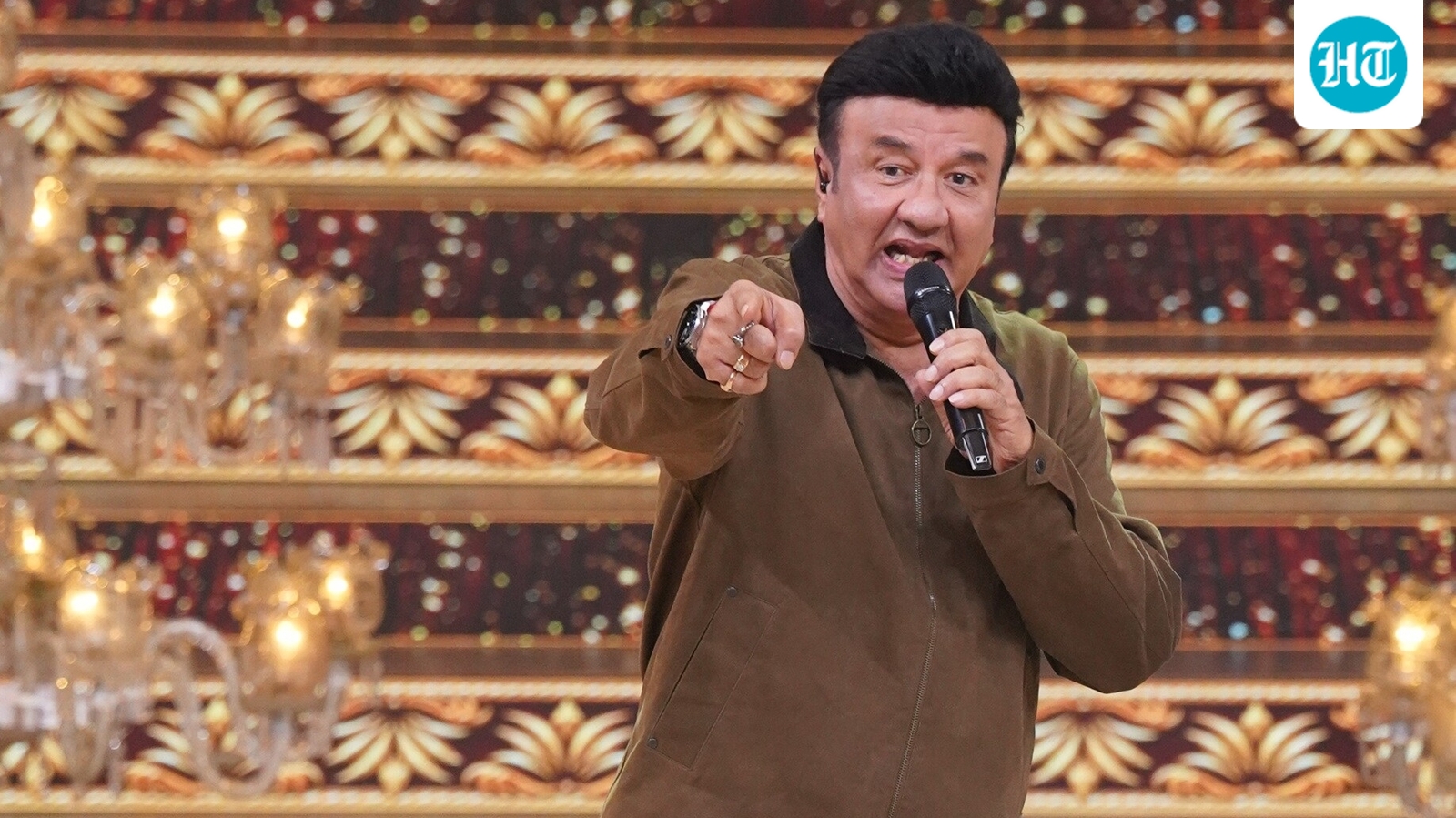
Composer-singer Anu Malik, who has given Hindi cinema several memorable hits over the years, is back on the sets of a singing reality show as a super judge. For the composer, the experience is also an opportunity to revisit the kind of musical environment he grew up working in, from recording with large orchestras to watching a new generation of singers interpret melodies that have stood the test of time.
Returning for his fourth stint on Sa Re Ga Ma Pa, as the super judge Malik says meeting fellow judges Kumar Sanu, Shankar Mahadevan and Javed Ali has made the experience particularly special. “It’s always like coming back to your family. It’s an authentic show,” he says.Anu Malik on finding his feet among legends Laxmikant-Pyarelal, R D BurmanOne of the things that has struck him this season is the decision to bring together 100 musicians, including violinists, violists, a chorus, brass section and synthesiser players.
For Malik, it brings back memories of recording music in the 1990s, when live musicians were an integral part of the process. “This is something which I used to do in the 90s, record live with my singers,” he recalls. The experience also takes him back to Babu Studios, where he recorded several of his songs.
He remembers Kumar Sanu recalling how the atmosphere on the sets reminded him of those recording days, particularly when Malik was working on Baazigar O Baazigar. “They recreated an atmosphere of what I would do in Babu Studios, say 40 years back. It was amazing, it was surreal to see Kumar Sanu sitting there,” he says.The composer is equally impressed by the talent he has encountered among the contestants this season.
Recalling a young singer from Maharashtra who performed his song Kali Kali Aankhen, Malik says her interpretation took him by surprise. “She picked it up so well. People are going to love this,” he says.
The ability to keep evolving with changing musical tastes is something Malik believes has also shaped his own journey. From the sound of the 1990s to experimenting with newer musical arrangements in Kali Kali Aankhen and Mere Mehboob Mere Sanam, he says he has always tried to push his creative boundaries. “I tend to move at times.
In the 1990s, we did a certain kind of music and later I tried to raise the bar by coming out with a different sound,” he says.Having worked alongside some of the biggest names in the music industry, Malik says his early years were shaped by the need to establish himself among established composers such as Laxmikant-Pyarelal, R D Burman and Kalyanji-Anandji. “I was a boy of 18, 19, just walking out in front of these giants. I had to work hard to get even one song recorded,” he recalls.He is particularly pleased to see younger singers and composers giving fresh interpretations to his older compositions, something he believes reflects the strength of a melody. “What is standing out is the melody of mine, the way I’ve created the melody, and that’s something which I feel very proud of,” he end.