


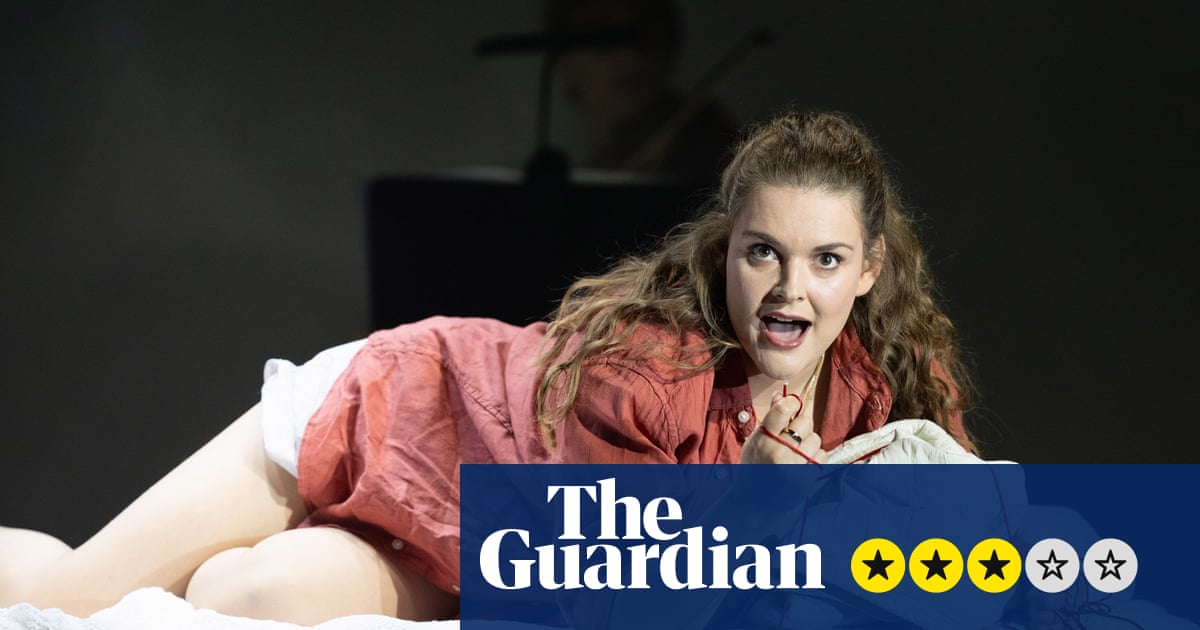
The autumn season of the English Touring Opera explores a central mythological theme centered on women left behind. Paired alongside Gluck’s Orpheus and Eurydice is a compact double bill featuring Elena Langer’s Ariadne, a 20-minute soprano scene with text by Glyn Maxwell originally premiered in 2002.
Langer’s concise work functions as a monologue, delivered with polished vocal brilliance by Jessica Cale. Anna Morrissey’s direction incorporates six performers on stage, framing abandonment as both an active and passive experience. The narrative opens with Theseus departing, untangling himself from a sleeping Ariadne and a physical red thread connected to a pile on the floor.
Instrumental accompaniment is provided by a quartet consisting of an oboe, violin, viola, and cello performing without a conductor, creating bright textures that complement the vocal performance. Joseph Hornsby’s lighting design enhances the atmosphere as Ariadne gazes toward the sea from her rotating platform bed.
In contrast, Rebecca Meltzer’s production of Dido and Aeneas adopts a distinct playground dynamic, nodding to the opera's historical early performances by school pupils. The cast wears variations of charcoal blazers and pleated skirts reminiscent of a formal school environment or contemporary fashion show. Lydia Shariff portrays the Sorceress with distinct authoritarian body language, while Isabelle Atkinson plays Belinda as a conflicted confidante.
Within the orchestral pit, Alex Robinson leads the ensemble from the harpsichord with steady tempos. Despite expressive singing by Samantha Price in the title role, the staging portrays Dido primarily as a victim from the outset, leaving less room for the traditional grandeur of a royal downfall driven by divine caprice.