


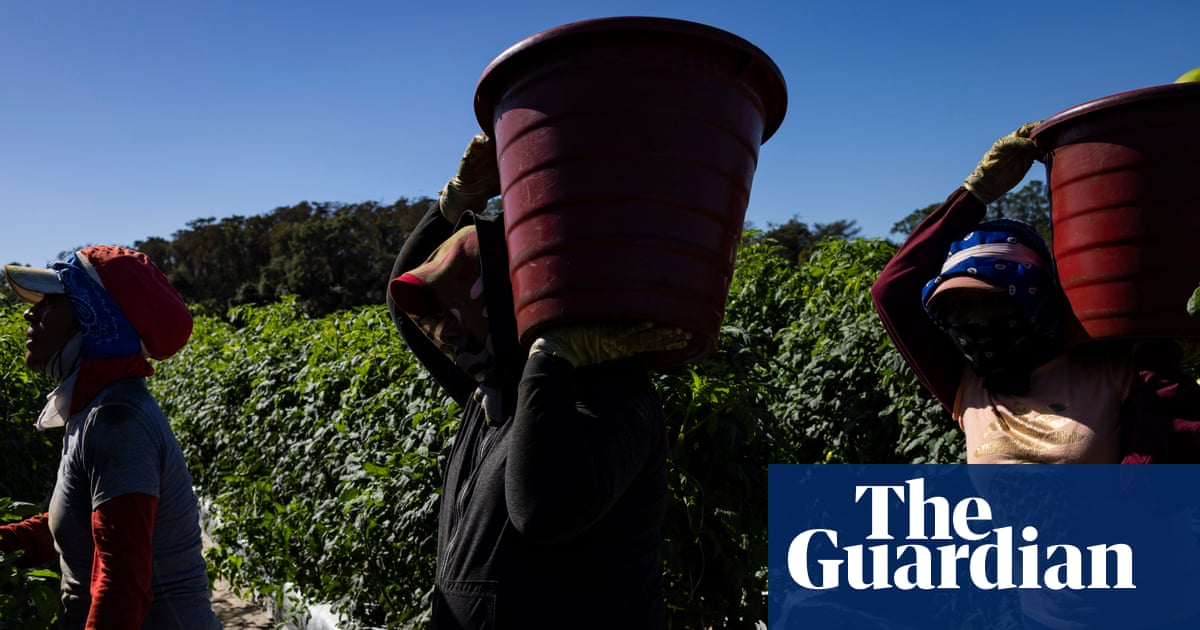
Describing conditions reminiscent of extreme dehydration and parched skin, Lucas Benitez reflected on harvesting watermelons alongside his wife and sons this summer, emphasizing that contemporary temperatures far exceed those experienced three decades ago. Following the hottest summer on record in the United States, the majority of employees working in fields, greenhouses, and unconditioned indoor spaces still lack occupational heat safeguards, exposing them to heightened health dangers amid an escalating climate crisis.
Having started in Immokalee, Florida tomato fields at age 16, Benitez co-established the Coalition of Immokalee Workers in the early nineties, named after the prominent southwestern Florida agricultural hub. Today, the coalition's fair food initiative provides some of the nation's most robust employee heat defenses, serving as a blueprint for domestic and international organizations as official legislative measures stall.
These safeguards emerged following prolonged demonstrations, hunger strikes, and boycotts directed at major food corporations. Academic experts categorize this framework as market-based enforcement, which leverages the public reputations of well-known retail brands—such as fast-food chains—rather than smaller supply chain participants to elevate working conditions.
Participating retailers contribute a modest financial premium when purchasing from compliant agricultural operations. Suppliers breaching the established code of conduct risk losing their preferred standing, granting employees an effective enforcement mechanism independent of government oversight.
Miami-based advocacy organization WeCount represents one of several labor groups currently mirroring the fair food initiative structure for other high-temperature, low-wage sectors. Comparable human rights frameworks have been established by worker coalitions representing dairy workers in Vermont, construction personnel in Minnesota, sugarcane laborers in India, and banana producers in Ecuador.
According to Oscar Londoño, co-executive director of the immigrant-led human rights group WeCount, Florida generates approximately seventy percent of all indoor plants sold nationwide. During the recent summer, individuals cultivating these plants endured temperatures surpassing one hundred degrees Fahrenheit, frequently experiencing dehydration and heat-related illnesses.
Londoño noted that workers routinely feel on the verge of fainting and that numerous accounts of heatstroke exist. Severe temperatures jeopardized other laborers as well during the season; twenty-four-year-old Obed Azahel Hernandez Perez succumbed to extreme heat exposure in September while gathering sweet potatoes in Mississippi's Chickasaw County, while forty-seven-year-old Marco Antonio Hernandez Guevera collapsed and died from heat exhaustion last year during his initial shift at an Immokalee tomato farm.
Medical facilities in Texas are similarly documenting rising instances of kidney disease among outdoor laborers, a condition researchers associate with extended exposure to severe heat.
For an extended period, WeCount pursued statutory heat protections at the state level. Although primarily symbolic and lacking enforcement provisions or penalties, the proposed legislation repeatedly failed in committee, according to Londoño. In response, the organization and statewide labor allies initiated the “que calor” campaign in 2021 to secure mandatory safeguards. Two years afterward, WeCount shifted focus toward municipal legislation.
Unlike the unsuccessful state proposals, the county measure featured strict monetary penalties to guarantee industry-wide adherence, Londoño explained. The nineteen-page municipal regulation mandated paid rest intervals, clean drinking water availability, and emergency first aid protocols whenever the heat index reached ninety degrees Fahrenheit. A five-member Miami-Dade county commission committee initially approved the measure by a four-to-one margin, followed by a unanimous first-reading passage from the full commission.
However, prior to the final legislative vote, the Florida state government intervened by enacting a pre-emption statute that outlawed municipal heat protection mandates for outdoor workers statewide. Londoño described the pre-emption of logical safety measures as devastating, asserting that every employee is entitled to such safeguards.
WeCount has additionally lobbied for national occupational standards proposed by the Occupational Safety and Health Administration under the Biden administration. Londoño observed that these federal standards appear stalled, leaving employees unable to rely on them, particularly as legislation introduced last November by Indiana Representative Mark Messmer seeks to prevent OSHA from enforcing heat regulations.